People
Yang Guang: Emperor Yang of Sui and the Grand Canal
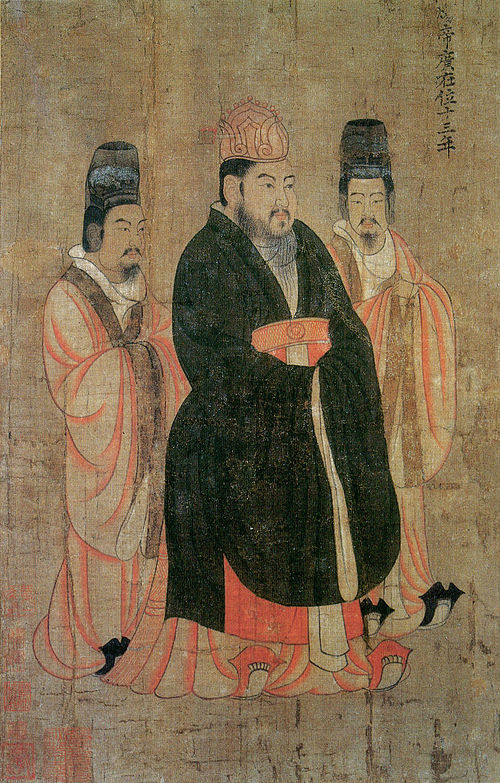
Yang Guang (杨广), known as Emperor Yang of Sui, was the second emperor of the Sui Dynasty. He is famous for the Grand Canal, the eastern capital at Luoyang, costly campaigns against Goguryeo, and the collapse of Sui rule.
Key Facts
- Identity
- second emperor of the Sui Dynasty
- Chinese Name
- 杨广
- Pronunciation
- Yáng Guǎng
- Ethnicity
- Han Chinese
- Lived
- 569-618 CE
- Dynasty
- Sui Dynasty
- Known For
- the Grand Canal, Luoyang projects, Goguryeo wars, and Sui collapse
- Historical Role
- He pushed Sui imperial mobilization to its height and then beyond its limits.
Quick Answer
Yang Guang was Emperor Yang of Sui, a ruler remembered for huge projects and disastrous overreach. His reign left long-term infrastructure, but it also helped trigger rebellion and the end of Sui.
He is not easy to reduce to one label. He was energetic and ambitious, but his state demanded more labor, war service, and obedience than society could bear.
Early Life
Yang Guang was a son of Yang Jian, Emperor Wen of Sui, and Empress Dugu. As a prince, he held high titles and took part in major Sui politics.
In 589, he played a ceremonial and command role in the conquest of Chen, the southern dynasty whose fall completed Sui reunification. That success gave him prestige before he became emperor.
Rise to Power
The original crown prince was Yang Yong. Court politics, family judgment, and Yang Guang's careful public image helped shift succession in his favor. In 600, Yang Yong was removed and Yang Guang became crown prince.
Yang Jian died in 604, and Yang Guang took the throne. Later tradition often suspected dark palace intrigue around the succession, but a careful account should say that he rose through a contested and politically charged transfer of power.
Timeline
569
Yang Guang was born
589
He took part in Sui's conquest of Chen
600
He became crown prince after Yang Yong was removed
604
Yang Guang became emperor
605 onward
Major projects at Luoyang and the Grand Canal accelerated
612 onward
Large campaigns against Goguryeo strained the empire
618
Yang Guang was killed during the Jiangdu coup
Major Achievements
1. Expanding the Grand Canal system
The Grand Canal linked northern political centers with the rich lower Yangzi region. In the long run, this transportation network became one of imperial China's most important assets.
2. Building Luoyang as an eastern capital
Luoyang helped Sui govern beyond the old northwestern base. It sat closer to eastern and central China, where grain, population, and politics were increasingly important.
3. Continuing imperial centralization
Yang Guang inherited a powerful state and tried to make it move faster. Sui institutions, including central administration and recruitment reforms, influenced Tang governance after Sui fell.
4. Launching campaigns against Goguryeo
The Goguryeo wars were meant to secure imperial prestige and northeastern strategy, but repeated failure drained men, supplies, and political patience.
Why Is Yang Guang Important?
Yang Guang matters because his reign shows both the power and danger of a newly reunified empire. Sui could mobilize labor and armies on a huge scale, but scale alone did not mean stability.
His story also helps explain why the Tang Dynasty was important. Tang inherited Sui's geography and institutions while learning from the political cost of Sui overreach.
Important People Around Yang Guang
Yang Jian gave Yang Guang the unified empire he inherited, but also a tense succession system.
Empress Dugu helped shape Sui court politics and the replacement of Yang Yong.
Li Yuan later rose against the collapsing Sui order and founded Tang.
Mistakes and Controversies
Yang Guang's biggest controversy is cost. The canal and Luoyang had long-term value, but the labor demands were enormous.
His wars against Goguryeo deepened the crisis. Failed campaigns damaged military confidence, strained logistics, and encouraged rebellion across the empire.
Traditional histories also gave him the harsh posthumous image of a destructive ruler. Modern readers should hold both sides together: real achievements and real catastrophe.
Sources and Historical Tradition
Yang Guang's reign is recorded in the Book of Sui, the History of the Northern Dynasties, and the Zizhi Tongjian.
These sources were written after Sui collapse and often judge him through the dynasty's failure. They are still central for understanding his policies, wars, travels, and death.
Death and Legacy
In 618, Yang Guang was killed at Jiangdu during a coup led by forces around Yuwen Huaji. By then, Sui authority had largely broken apart.
His legacy remains mixed. The Grand Canal outlived him for centuries, but his reign also became the classic warning that imperial ambition can destroy the state that makes it possible.
Simple Summary
- Yang Guang was Emperor Yang of Sui.
- He expanded the Grand Canal and built Luoyang as an eastern capital.
- His Goguryeo campaigns placed huge strain on Sui society.
- Rebellion spread, and he was killed in 618.
- His reign links Sui achievement with Sui collapse.
FAQ
Who was Yang Guang?
Yang Guang was the second emperor of the Sui Dynasty, known as Emperor Yang of Sui.
Why is Yang Guang famous?
He is famous for the Grand Canal, the eastern capital at Luoyang, costly Goguryeo wars, and the collapse of Sui rule.
Was the Grand Canal good or bad?
In the long run it strengthened north-south transport, but in Yang Guang's time its construction placed heavy burdens on ordinary people.
How did Yang Guang die?
He was killed in 618 during the Jiangdu coup as Sui authority collapsed.