People
Geshu Han: The Tang General Who Lost Tong Pass
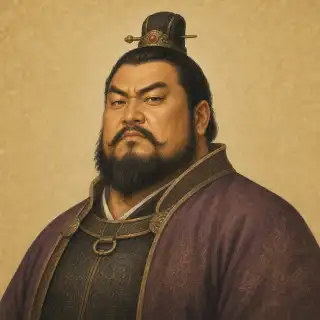
Geshu Han was one of the Tang dynasty's best-known frontier generals under Emperor Xuanzong. He built his reputation on the Tibetan frontier, but he is remembered most for the disaster at Tong Pass in 756: ill and opposed to a premature attack, he was nevertheless ordered to advance, defeated, and captured. The fall of the pass opened the road into the Tang heartland.
Key Facts
- Identity
- Tang frontier general and commander at Tong Pass
- Chinese Name
- 哥舒翰
- Pronunciation
- Gēshū Hàn
- Ethnic Affiliation
- From a frontier military family; modern ethnic labels do not fit the evidence neatly
- Lived
- c. 696-757
- Era
- Late reign of Emperor Xuanzong
- Known For
- Opposing a premature advance from Tong Pass during the An Lushan Rebellion
- Historical Role
- Commander whose defeat exposed Guanzhong and Chang'an to the rebels
Quick Answer
Geshu Han was not simply a general who lost a battle. His defeat came after a conflict between the needs of the front line and the political demands of the court. He believed the Tang army should use Tong Pass's natural defenses; the court wanted a quick victory.
Early Career on the Frontier
Geshu Han spent much of his career in the northwest, where Tang forces faced the Tibetan Empire across difficult terrain. His record there made him a prestigious commander, like Gao Xianzhi, another frontier general whose career shows how much Tang security depended on officers far from the capital.
Frontier experience taught Geshu Han that terrain, supplies, and troop quality mattered as much as courage. Those lessons shaped his later judgment at Tong Pass.
Why Geshu Han Was Sent to Tong Pass
When the rebellion broke out, the Tang court needed an established commander to hold the eastern entrance to Guanzhong, the region around Chang'an. Geshu Han was already seriously ill, yet he was placed in command at Tong Pass.
He argued that the Tang army should stay behind the pass. Many of his soldiers were newly raised and unready for a field battle against rebel veterans. A defensive position would force the enemy to attack through difficult ground.
Timeline
Before 755
Frontier reputation
Built military standing in campaigns on the Tibetan frontier.
755
An Lushan Rebellion begins
The Tang court turns to senior frontier commanders for help.
756
Command at Tong Pass
Geshu Han argues for holding the pass rather than advancing.
June 756
Defeated and captured
Forced out of Tong Pass, his army collapses and the pass falls.
757
Killed
He is killed after the rebel leadership changes.
Major Actions
1. Defending the Tang frontier
Geshu Han's earlier military service helped contain pressure on the Tang northwest. His frontier reputation was why the court trusted him with a crisis of far greater scale.
2. Arguing to hold Tong Pass
His central judgment in 756 was strategic: a defensive army should use the pass, while inexperienced troops should not be thrown into open battle. This was a practical assessment of the army available to him.
3. Losing the pass after a forced advance
Chancellor Yang Guozhong and the court repeatedly pressed for an offensive. Emperor Xuanzong, already under immense pressure, accepted that course. The Tang army went out, was beaten near Lingbao, and Tong Pass soon fell.
Why Geshu Han Matters
The fall of Tong Pass shows why the An Lushan Rebellion cannot be explained through one man's courage or cowardice. Court politics, command pressure, logistics, and poorly trained troops all shaped the outcome.
It also helps explain why the reign of Emperor Xuanzong ended in flight from Chang'an. The military crisis unfolded alongside a court already weakened by mistrust and desperate decision-making.
Important People Around Geshu Han
Emperor Xuanzong and Yang Guozhong
Xuanzong wanted the rebellion checked quickly. Yang Guozhong feared that Geshu Han might be holding back his troops for political reasons. Their pressure made it impossible for the commander to keep a purely defensive plan.
An Lushan
The rebel leader's forces benefited enormously from the Tang decision to leave the pass. The disaster was part of the wider collapse that made the rebellion a turning point for the dynasty.
Yang Guifei
Yang Guifei was not responsible for the battlefield command, but the crisis at Tong Pass led directly into the flight from Chang'an and the court collapse that ended at Mawei.
Mistakes and Controversies
Later accounts often turn Tong Pass into a simple morality tale, blaming either Yang Guozhong or Geshu Han alone. That is too neat. Geshu Han was responsible for the army under his command, but he was ill, his troops were uneven, and he was acting under direct orders.
Sources and Historical Tradition
Geshu Han's career is recorded in the Old Book of Tang, the New Book of Tang, and the Zizhi Tongjian. These histories preserve the main sequence but also reflect later efforts to assign responsibility for the Tang catastrophe.
Death and Legacy
After his defeat, Geshu Han was delivered to the rebels and used in unsuccessful efforts to persuade Tang commanders to surrender. He was killed in 757. Later memory made him the tragic commander who understood the value of Tong Pass but was not allowed to hold it.
Simple Summary
- Geshu Han was a respected Tang frontier general.
- He wanted to defend Tong Pass instead of fighting in the open.
- Court pressure forced an advance, which ended in defeat and the fall of the pass.
- His story reveals the military and political failures behind the Tang collapse of 756.
FAQ
Who was Geshu Han?
Geshu Han was a Tang frontier general best known for commanding at Tong Pass during the An Lushan Rebellion.
Why did Geshu Han lose Tong Pass?
He opposed an early advance, but court orders forced his poorly prepared army into battle outside the pass. The defeat caused the pass to fall.
Why was Tong Pass important?
Tong Pass guarded the eastern approach to Guanzhong and Chang'an. Once it fell, the Tang capital region was exposed to the rebels.