People
Gao Xianzhi: Tang General, Talas, and Central Asia
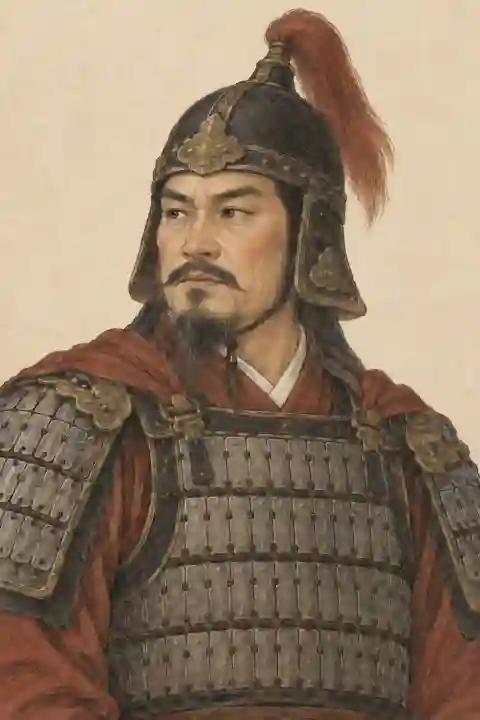
Gao Xianzhi (高仙芝, died 756) was a leading Tang commander in Central Asia. Born into a family of Goguryeo background, he rose through the Tang army to govern the Anxi Protectorate, campaign across the Pamirs, and fight at the Battle of Talas in 751. His defeat there mattered, but it did not cause Tang rule in the Western Regions to disappear overnight.
Key Facts
- Identity
- Tang frontier general and military governor of Anxi
- Chinese Name
- 高仙芝
- Pronunciation
- Gāo Xiānzhī
- Ethnic Affiliation
- Born into a family of Goguryeo background; served in the Tang military system
- Lived
- Birth year unknown-756 CE
- Dynasty
- Tang Dynasty, Tianbao period
- Known For
- Campaigns in the Pamirs and the Battle of Talas
- Historical Role
- A major commander of Tang expansion and setback in Central Asia
Quick Answer
Gao Xianzhi made Tang power visible far beyond the Pamirs. His campaigns depended on garrisons, oasis states, trade routes, and local allies rather than direct Tang rule over all of Central Asia.
At Talas, his army lost to Abbasid forces and their allies far from its supply base. Gao escaped with a remnant, and Tang positions in the Western Regions survived for the moment. The larger break came after the An Lushan Rebellion drew frontier forces back toward the Chinese heartland.
Early Life
Gao's father, Gao Sheji, came from Goguryeo and later served in the Tang army. The sources give limited detail on Gao Xianzhi's early years, but his rise came through frontier service rather than an established Chinese aristocratic pedigree.
That background suited the Anxi frontier. Warfare there crossed mountains, oasis states, and shifting local alliances. Command required logistics and diplomacy as much as battlefield skill.
Rise to Power
Gao accumulated military credit in Anxi and became its military governor. In 747, he led a difficult campaign over high mountain routes against Lesser Bolü, strengthening Tang influence near the Pamirs and limiting Tibetan power in the region.
The victory also had limits. Tang influence west of the Pamirs relied on local rulers, garrisons, and routes, not on turning Central Asian states into ordinary Tang provinces. Gao's later attack on the city-state of Shash damaged trust among some of those local partners.
Timeline
Unknown
Gao Xianzhi was born
He was born into a family of Goguryeo background.
Early Tianbao era
He rose in the Anxi army
Frontier service made him a major Tang commander.
747
He captured Lesser Bolü
A difficult campaign increased Tang leverage in the Pamirs.
Around 750
He attacked Shash
The operation worsened relations with a Central Asian city-state.
751
He fought at Talas
The Tang force lost to Abbasid forces and allied troops.
756
He was executed
He was killed during the confused early response to the An Lushan Rebellion.
Major Achievements and Impact
1. He expanded Tang leverage near the Pamirs
Gao's campaign against Lesser Bolü gave Tang a major success on the routes near the Pamirs. It affected the balance among Tang, Tibet, and local rulers and protected parts of the network linking Anxi to Central and South Asia.
2. He showed how Tang rule worked on the frontier
His campaigns demonstrate that Tang influence in Central Asia rested on a network of garrisons, trade, alliances, and intimidation. It was powerful, but also dependent on logistics and local confidence.
3. He lost at Talas, with limits to its consequences
At Talas in 751, Tang forces faced Abbasid troops and local allies. Sources disagree about army sizes, the actions of the Karluks, and the battle's details. The secure conclusion is that Gao's force lost far from support and he withdrew with a small remnant.
The defeat halted further westward expansion but did not immediately end Tang presence in the Western Regions. Claims that the battle instantly transferred papermaking to the Islamic world are also too neat; technological exchange in Central Asia had more than one route and timeline.
4. He became a casualty of the An Lushan crisis
When the rebellion began, Gao was called back from the frontier and assigned to defend the approaches to the capital. In 756, the eunuch monitor Bian Lingcheng accused Gao and his colleague Feng Changqing of cowardice and withholding supplies. Xuanzong had both executed in a decision later historians often regarded as hasty.
Why Is Gao Xianzhi Important?
Gao Xianzhi makes the multiethnic character of the Tang empire visible. A commander of Goguryeo family background could lead Tang armies across Central Asia and become part of the politics of the Abbasid frontier.
He also helps put Talas in proportion. The battle was a real setback, but the An Lushan Rebellion and the diversion of frontier troops did more to limit Tang power in the Western Regions.
Important People Around Gao Xianzhi
Emperor Xuanzong, Li Longji supported expansive Tang frontier policy and valued victories that demonstrated imperial prestige. Gao's campaigns reflected both the emperor's strategy and the commander's own ambition.
Feng Changqing was Gao's important subordinate in Anxi and later served alongside him in the early rebellion crisis. Both were executed when the court sought rapid blame for military reverses.
Li Siye helped open a path for the retreating Tang force after Talas. He later became an important general in the war against the An Lushan Rebellion, linking the Central Asian frontier to the defense of the Tang heartland.
Mistakes and Controversies
Gao's attack on Shash is an unavoidable part of his record. Sources differ over the exact violence and deception involved, but the operation clearly made Central Asian partners less secure about Tang intentions and gave Abbasid forces an opportunity to intervene.
The popular story that Talas alone carried papermaking westward should be treated cautiously. Accounts of captured artisans have a basis in the tradition, but they do not prove a single, immediate transfer or explain every later development.
Sources and Historical Tradition
Gao's career is recorded in the Old Book of Tang, the New Book of Tang, and Sima Guang's later chronological history, the Zizhi Tongjian. These sources establish the sequence of his western campaigns, Talas, and his execution in 756.
Chinese, Arabic, and later modern accounts differ over numbers, local allies, and the battle's consequences. The uncertainty is a reason to state the broad outcome clearly while avoiding overly precise claims that the evidence cannot support.
Death and Legacy
In 756, Gao was defending the Tong Pass approaches when Bian Lingcheng accused him and Feng Changqing of failures. Xuanzong ordered their execution. The loss of experienced commanders showed how fear, poor information, and the search for blame damaged the Tang response to rebellion.
Gao's legacy is therefore more than a single battlefield defeat. It connects the height of Tang Central Asian influence, the limits of frontier power, and the internal crisis that forced the empire to retreat from wider commitments.
Simple Summary
- Gao Xianzhi was a major Tang commander of Goguryeo family background.
- He captured Lesser Bolü in 747 and strengthened Tang influence near the Pamirs.
- His army lost at Talas in 751, but Tang did not immediately abandon all Western Regions positions.
- The An Lushan Rebellion had a greater effect on Tang withdrawal from Central Asia.
- Gao was executed in 756 during the confused early response to the rebellion.
FAQ
Who was Gao Xianzhi?
Gao Xianzhi was a Tang frontier general of Goguryeo family background who led campaigns in Central Asia and fought at Talas in 751.
What was Gao Xianzhi's ethnic background?
He was born into a family of Goguryeo background and built his career in the Tang army. This is more precise than applying a modern ethnic label.
Why did Gao Xianzhi lose at Talas?
His force fought far from its supply base against Abbasid troops and allied local forces. Sources differ over the precise details, but the Tang army was outmatched and withdrew.
Did Talas end Tang rule in Central Asia?
No. Tang positions in the Western Regions continued for a time. The An Lushan Rebellion and the diversion of frontier troops had a larger effect on later withdrawal.