People
Li Yuan: Founder of the Tang Dynasty
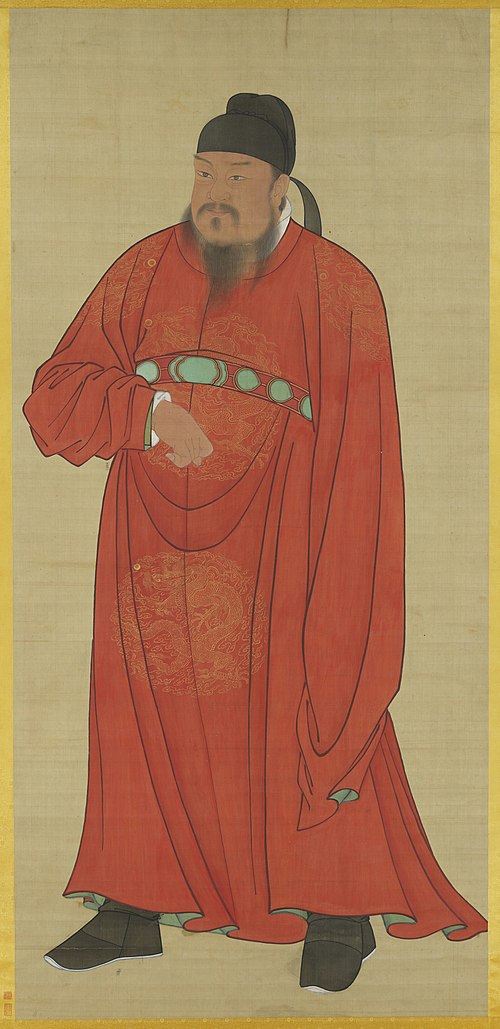
Li Yuan (李渊), later known as Emperor Gaozu of Tang, was the founder of the Tang Dynasty. He began as a powerful Sui aristocrat, raised troops at Taiyuan during the Sui collapse, entered Chang'an, and turned civil war into a new imperial dynasty.
Key Facts
- Identity
- founder of the Tang Dynasty and first Tang emperor
- Chinese Name
- 李渊
- Pronunciation
- Lǐ Yuān
- Ethnicity
- Han Chinese
- Lived
- 566-635 CE
- Dynasty
- Sui-Tang transition; Tang Dynasty
- Known For
- the Taiyuan uprising, capture of Chang'an, and founding Tang
- Historical Role
- He converted late Sui military and aristocratic networks into Tang imperial rule.
Quick Answer
Li Yuan founded the Tang Dynasty in 618 after rising against the collapsing Sui state. He is remembered as Emperor Gaozu of Tang.
His importance is sometimes overshadowed by his son Li Shimin, but Li Yuan created the legal and political opening through which Tang rule began.
Early Life
Li Yuan came from the northwestern aristocratic world that had shaped Northern Zhou and Sui politics. He inherited the title Duke of Tang while still young and served in the Sui government for many years.
This background mattered. Li Yuan was not an outside rebel with no connection to the old order. He knew Sui administration, had family links to leading aristocrats, and commanded respect among military elites around Taiyuan.
Rise to Power
Late in the reign of Yang Guang, Emperor Yang of Sui, the empire faced failed wars, heavy labor demands, and spreading rebellions. Li Yuan watched the crisis from Taiyuan, a major northern military base.
In 617, he raised troops. At first, he claimed to be correcting Sui misrule rather than destroying the dynasty outright. He moved quickly into the Guanzhong region, captured Chang'an, and installed the young Yang You as a puppet Sui emperor.
Timeline
566
Li Yuan was born into a powerful aristocratic family
617
He raised troops at Taiyuan as Sui authority collapsed
617
Li Yuan captured Chang'an and controlled the imperial center
618
He accepted abdication and founded the Tang Dynasty
626
After the Xuanwu Gate Incident, Li Shimin became heir
635
Li Yuan died as retired emperor
Major Achievements
1. Choosing Taiyuan as a base
Taiyuan gave Li Yuan troops, supplies, and a strong northern position. His uprising was not random. It began from a place that could support a serious campaign.
2. Capturing Chang'an
By entering Chang'an, Li Yuan gained more than a city. He gained the stage on which a new dynasty could claim legitimacy.
3. Founding Tang through abdication
Li Yuan first ruled in the name of Sui, then accepted abdication in 618. This made the transition look like a transfer of order, not only a military seizure.
4. Building the early Tang framework
Tang still had to defeat rival powers such as Wang Shichong and Dou Jiande, but Li Yuan established the court, reign title, and central authority from which that unification could proceed.
Why Is Li Yuan Important?
Li Yuan matters because he stands at the hinge between Sui collapse and Tang success. The Tang did not appear from nowhere. It grew out of Sui institutions, northwestern aristocratic networks, and the military crisis of the early seventh century.
He also shows why founding a dynasty required more than battlefield brilliance. Li Yuan used timing, legitimacy, kinship, and geography to make rebellion look like restoration.
Important People Around Li Yuan
Li Shimin, his second son, became the most famous Tang prince and later Emperor Taizong. His victories helped Tang defeat major rivals.
Yang Guang was the Sui emperor whose overstretched rule created the conditions for Li Yuan's revolt.
Li Jiancheng, Li Yuan's eldest son and original heir, became the central victim of the Xuanwu Gate succession crisis.
Mistakes and Controversies
Li Yuan's first public claim was loyalty to Sui, yet he soon founded Tang. That was common in dynastic transitions, but it reminds readers that legitimacy was carefully managed.
His later reign was also weakened by conflict among his sons. The Xuanwu Gate Incident in 626 forced him to make Li Shimin heir and then retire from power.
Sources and Historical Tradition
Li Yuan's life is mainly known through Tang-era histories such as the Old Book of Tang, the New Book of Tang, and later chronological works such as the Zizhi Tongjian.
These sources preserve the official Tang memory of the dynasty's founding. They are essential, but readers should remember that later Tang political memory often made Li Shimin look brighter and Li Yuan more passive.
Death and Legacy
After 626, Li Yuan lived as retired emperor while Li Shimin ruled. He died in 635 and was remembered by the temple name Gaozu.
His legacy is simple but huge: he founded the Tang Dynasty, one of the most influential dynasties in Chinese history, and made the Sui-Tang transition politically workable.
Simple Summary
- Li Yuan founded the Tang Dynasty in 618.
- He rose from the Sui aristocracy, not from outside the elite.
- His Taiyuan uprising and capture of Chang'an gave Tang its base.
- Li Shimin later overshadowed him, but Li Yuan began the dynasty.
- He is best understood through the wider Sui Dynasty to Tang transition.
FAQ
Who was Li Yuan?
Li Yuan was the founder of the Tang Dynasty and the first Tang emperor, later known as Emperor Gaozu of Tang.
How did Li Yuan found the Tang Dynasty?
He raised troops at Taiyuan in 617, captured Chang'an, first ruled through a puppet Sui emperor, and then founded Tang in 618.
Was Li Yuan the father of Li Shimin?
Yes. Li Yuan was Li Shimin's father. Li Shimin later became Emperor Taizong of Tang.
Why is Li Yuan less famous than Li Shimin?
Li Shimin's military victories and later reign became central to Tang memory, so Li Yuan is often remembered mainly as the founder.