People
Qin Shi Huang: Unification, Emperor Power, and Qin's Fall
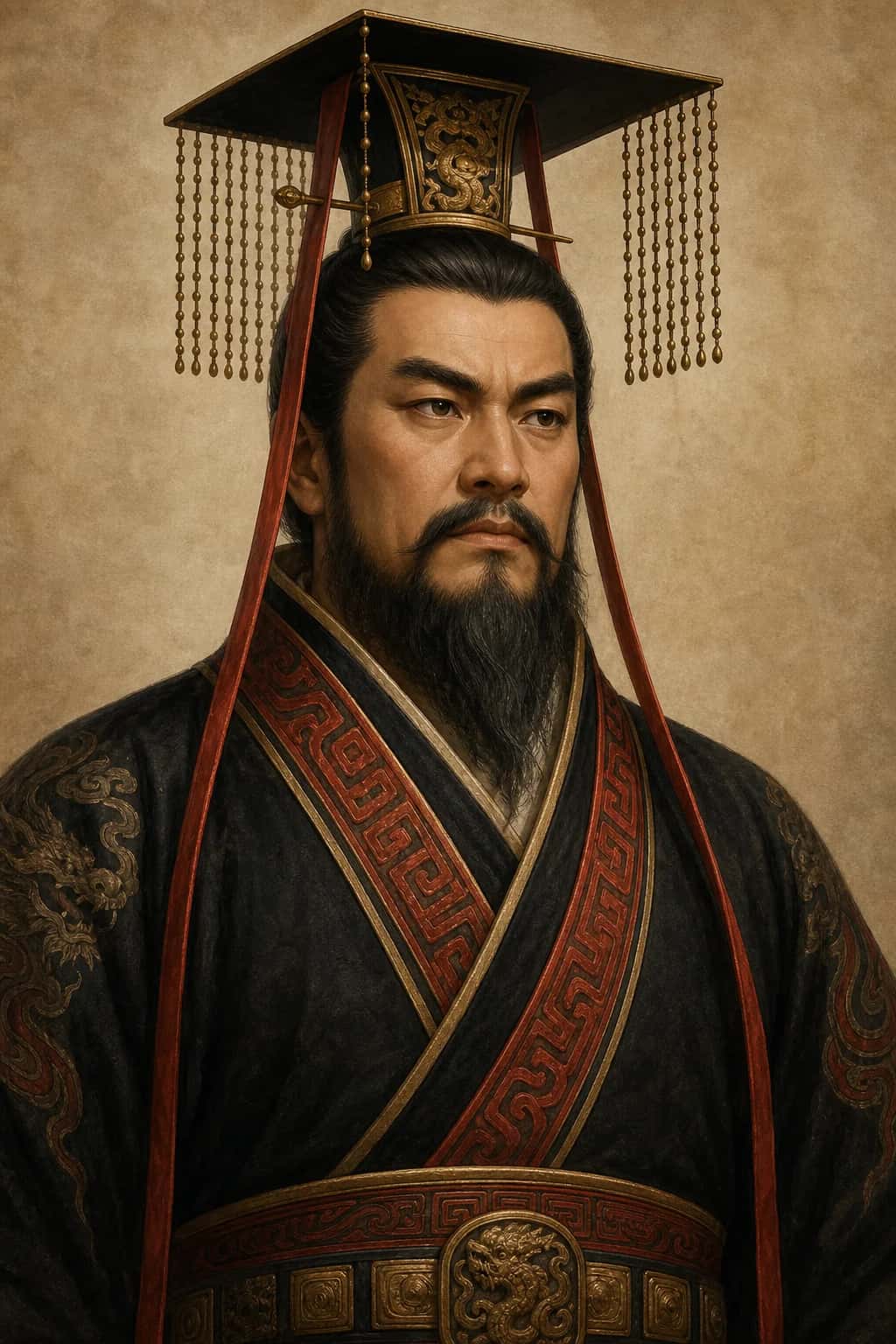
Qin Shi Huang was the founder of the Qin Dynasty and the first ruler to call himself emperor of a unified China. He ended the Warring States era, built a centralized imperial system, and left a legacy that is both foundational and deeply controversial.
Key Facts
- Chinese Name
- 秦始皇
- Pronunciation
- Qín Shǐ Huáng
- Identity
- First emperor of the Qin Dynasty
- Lived
- 259-210 BCE
- Dynasty
- Qin Dynasty
- Known For
- Unifying the six states, creating the emperor title, standardizing writing and measurements
- Historical Role
- Founder of China's imperial age
Quick Answer
Qin Shi Huang was the first emperor of a unified China. He conquered the six rival states, created a new imperial title, centralized government, standardized key systems, and became famous for both state-building and harsh rule.
Early Life
Qin Shi Huang was born Ying Zheng in Handan, the capital of Zhao. His father, Yiren, was a Qin royal hostage in Zhao before returning to Qin through the political support of Lü Buwei.
Ying Zheng became king of Qin at thirteen. At first, powerful figures such as Lü Buwei and Queen Dowager Zhao shaped the court around him. After suppressing the Lao Ai crisis and pushing Lü Buwei aside, Ying Zheng began to rule directly.
Rise to Power
Ying Zheng inherited a Qin state already strengthened by generations of reform, especially the legacy of Shang Yang. Qin had strong administration, military discipline, and the ability to mobilize people and resources on a large scale.
Once he controlled the court, Ying Zheng used that state machine to conquer Han, Zhao, Wei, Chu, Yan, and Qi. In 221 BCE, he completed unification and took the title Qin Shi Huang, the First Emperor.
Timeline
259 BCE
Ying Zheng is born in Handan
His early life is tied to Qin-Zhao hostage politics.
247 BCE
He becomes king of Qin
He takes the throne as a young ruler under powerful court figures.
238 BCE
He consolidates personal power
The Lao Ai crisis and Lü Buwei's fall allow him to rule more directly.
230-221 BCE
Qin conquers the six states
Qin defeats the remaining rival states and ends the Warring States era.
221 BCE
He becomes the First Emperor
Ying Zheng creates the emperor title and founds the Qin Dynasty.
210 BCE
He dies during an imperial tour
His death triggers a succession crisis that weakens Qin almost immediately.
Major Achievements
1. He unified the six states
Qin Shi Huang's greatest achievement was ending centuries of interstate warfare. The result was not just a larger kingdom, but a new imperial order.
2. He created the emperor title
By calling himself emperor, he placed the ruler above the old title of king. This title shaped Chinese rulership for more than two thousand years.
3. He promoted centralized rule
Qin did not restore a broad feudal order. It relied on commanderies and counties, with officials appointed by the center.
4. He standardized writing, weights, measures, currency, and axle widths
These policies made administration easier across a newly unified empire. They also helped later dynasties inherit a more connected political world.
5. He strengthened northern defense
Qin sent Meng Tian north against the Xiongnu and connected earlier walls into a stronger frontier defense system.
Why Is Qin Shi Huang Important?
Qin Shi Huang matters because he marks the beginning of imperial China. Later dynasties often criticized Qin's harshness, but they still inherited many Qin assumptions about centralized authority.
He also matters because his life shows the cost of extreme state power. The same state machine that unified China also placed heavy burdens on ordinary people.
Readers can place him within the wider Qin Dynasty and the long sequence of Chinese dynasties.
Important People Around Qin Shi Huang
1. Li Si
Li Si helped shape Qin institutions after unification, including centralization and standardization.
2. Wang Jian
Wang Jian was one of Qin's most important generals, especially in the conquest of Chu.
3. Meng Tian
Meng Tian led major northern campaigns and became tied to the succession crisis after Qin Shi Huang's death.
4. Zhao Gao
Zhao Gao manipulated the succession after the emperor died and helped bring Qin politics into collapse.
5. Lü Buwei
Lü Buwei shaped the political world of Ying Zheng's youth before the young king ruled in his own right.
Mistakes and Controversies
Qin Shi Huang's rule is controversial because his achievements came with severe control. Heavy labor demands, strict laws, political fear, and major construction projects created deep pressure.
The burning of books and burying of scholars became a lasting symbol of intellectual repression. The details are debated, but Qin clearly tried to control knowledge and political thought.
His pursuit of immortality and repeated tours also became part of his negative memory. Later writers used Qin as a warning about power without restraint.
Sources and Historical Tradition
The traditional portrait of Qin Shi Huang comes especially from Sima Qian's Shiji, or Records of the Grand Historian. It preserves both the scale of his achievements and the moral warning attached to Qin's collapse.
Modern readers should separate two layers: the historical results of unification and centralization, and the later lesson that Qin became a model of harsh rule.
Death and Legacy
Qin Shi Huang died in 210 BCE while traveling through the empire. Zhao Gao and Li Si concealed the death and supported Huhai, later Qin Er Shi, instead of the elder son Fusu.
That succession choice proved disastrous. Fusu and Meng Tian were forced to die, Qin politics fell under Zhao Gao's control, and the dynasty collapsed within a few years.
Qin Shi Huang's empire was short-lived, but his institutional legacy was enormous. He remains one of the clearest examples in Chinese history of achievement and danger joined together.
Simple Summary
- Qin Shi Huang was China's first emperor.
- He unified the six states and founded the Qin Dynasty.
- He created the emperor title and strengthened centralized rule.
- His reforms shaped later Chinese empire.
- His harsh rule and succession crisis helped Qin collapse quickly.
FAQ
Who was Qin Shi Huang?
Qin Shi Huang was the founder of the Qin Dynasty and the first emperor of a unified China.
What was Qin Shi Huang's greatest achievement?
His greatest achievement was unifying the six rival states in 221 BCE and creating a centralized imperial system.
Why is Qin Shi Huang controversial?
He built a powerful empire, but he also used harsh laws, heavy labor demands, political repression, and strict control over thought.
Why did Qin collapse so soon after him?
After his death, Zhao Gao and Li Si manipulated the succession. Qin Er Shi was weak, court politics collapsed, and rebellions spread quickly.