Comparisons
Xia Dynasty vs Shang Dynasty Government: Key Differences
Xia and Shang were both early dynasties, but the Shang left more oracle bones, sites, and ritual vessels. That makes its kingship, ritual, warfare, and regional relationships easier to observe. Neither should be measured by the later county-based bureaucracy of Qin and Han China.
Quick Answer
The Xia Dynasty is best understood as an early hereditary kingship. Later tradition treats Qi's succession after Yu as the beginning of rule within one royal house. The Shang combined royal power with ancestor ritual, divination, and relationships with regional powers; oracle bones, Yinxu, and bronzes give it much stronger direct evidence.
The most important difference is not that one dynasty had government and the other did not. Xia institutions rely more on later texts and archaeological debate, while Shang political practice can be seen more directly in contemporary material.
Xia vs Shang Government at a Glance
| Theme | Xia Dynasty Government | Shang Dynasty Government |
|---|---|---|
| Evidence | Known mainly through later texts, traditional memory, and archaeological debate | Late Shang rule is visible through oracle bones, bronzes, Yinxu, tombs, and archaeology |
| Core authority | Early hereditary kingship centered on the royal house | The Shang king, royal lineage, nobles, regional powers, and ritual institutions |
| Succession | Qi's succession after Yu is remembered as the beginning of hereditary rule | Royal succession was more complex, including brother-to-brother and branch-line competition |
| Ritual politics | Ritual and authority mattered, but the evidence is limited | Ancestor worship and divination were central to royal decision-making |
| Regional control | Difficult to reconstruct clearly; best understood as an early kingship network | Clearer relations among royal center, nobles, regional powers, tribute, warfare, and alliances |
| Institutional visibility | An early dynastic prototype in later tradition | A more visible royal-ritual and military system |
Key Facts
- Comparison
- Xia Dynasty government vs Shang Dynasty government
- Core question
- How early hereditary kingship became a more visible royal-ritual state
- Xia focus
- Hereditary rule, traditional memory, and archaeological debate
- Shang focus
- The king, oracle bones, ancestor ritual, bronzes, and regional powers
- Main difference
- Shang government has richer direct evidence, especially from late Shang oracle bones and Yinxu
Evidence note: This comparison treats traditional accounts and archaeological debate about the Xia separately. For the Shang, it relies primarily on what late Shang oracle bones, Yinxu, and bronzes can show. It therefore compares the evidence and operation of early kingship without projecting later Chinese bureaucracy backward onto either dynasty.
Why Compare Xia and Shang Government?
The Xia and Shang stand next to each other at the beginning of the traditional Chinese dynastic sequence. A broad dynasty overview can explain what each dynasty was, but a government comparison answers a narrower question: how did early Chinese rule work, and what changed between Xia and Shang?
This page is different from How Did the Shang Replace the Xia Dynasty?. That question focuses on dynastic replacement. This comparison focuses on political structure: succession, kingship, evidence, ritual power, and the relationship between the royal center and regional powers.
For background, start with:
- Xia Dynasty Guide: Timeline, Origins, and Legacy
- Shang Dynasty Guide: Oracle Bones, Bronze, and Kingship
Xia Government: Early Hereditary Kingship
The political meaning of the Xia Dynasty centers on hereditary kingship. In earlier stories, Yao passes power to Shun, and Shun passes power to Yu because of merit. After Yu, Qi succeeds within Yu's family line.
Later tradition treated that moment as a major turning point. Rule was no longer imagined only as a moral transfer to the worthiest successor. It became tied to one ruling house.
That does not mean the Xia had a mature bureaucracy. It is safer to see Xia government as an early kingship order built around lineage, royal succession, labor organization, ritual authority, military force, and control over the middle Yellow River world.
The Xia also appears politically fragile. Stories such as Tai Kang losing the realm, Hou Yi seizing power, and the Shaokang Restoration show that early hereditary kingship still had to survive rival leaders, unstable succession, and weakened royal control. For the evidence problem behind this dynasty, see Was the Xia Dynasty Real? Evidence and Debate.
Shang Government: Kingship, Ritual, and Oracle Bones
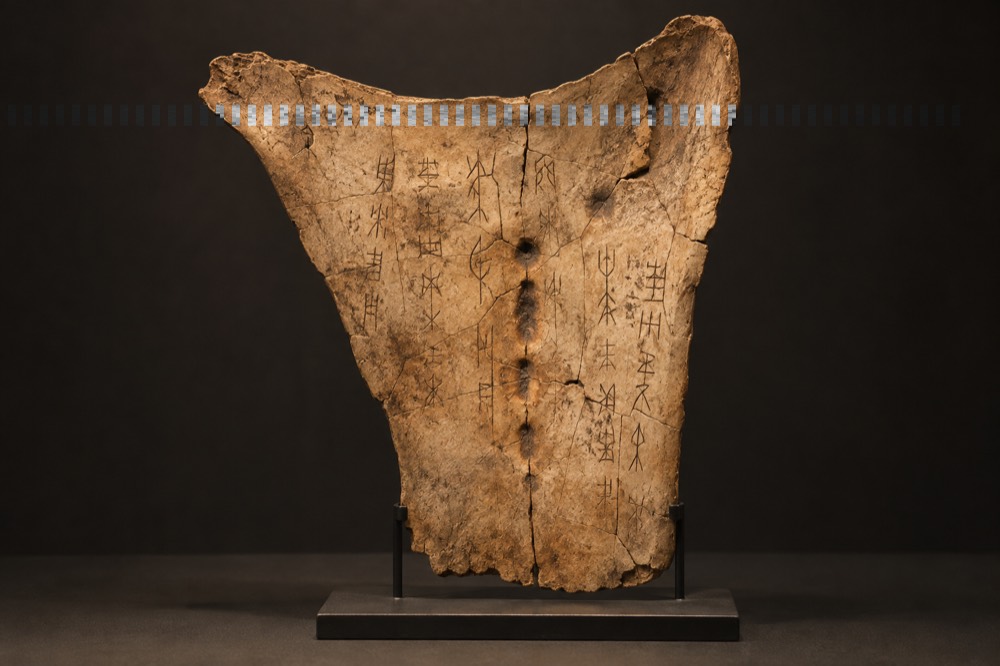
Shang government is easier to see because late Shang evidence is much stronger. Oracle bone inscriptions record royal divination about war, harvests, weather, childbirth, illness, sacrifice, and royal affairs.
The Shang king was not simply a commander. He stood at the center of political and ritual power. He led or directed campaigns, performed divination, organized sacrifice, communicated with ancestors, and managed relations with nobles and regional powers.
This makes Shang rule different from a later civil bureaucracy. It was a royal-ritual state. Political decisions, ancestor worship, warfare, and resource control worked together rather than sitting in separate modern categories.
This is why Oracle Bones are so important. They are not only evidence for early Chinese writing. They are also evidence for how Shang kingship worked.
How Were Xia and Shang Similar?
Both Xia and Shang belonged to early dynastic rule. Neither should be treated as a Qin or Han style imperial bureaucracy.
Both relied on royal authority. The Xia story centers on one ruling house, while the Shang world centers on the king and royal lineage. In both cases, political power was closely connected to family, ancestry, status, and elite support.
Both also depended on labor, warfare, ritual, and control over resources. Early kingship needed more than a title. It had to organize people, display power, mobilize materials, fight enemies, and persuade elites that the royal center mattered.
What Were the Biggest Differences?
The first difference is evidence. Xia government is difficult to reconstruct because it lacks the large body of readable contemporary texts that exists for the late Shang. Shang government can be discussed with more detail because oracle bones and archaeology give direct windows into royal activity.
The second difference is institutional clarity. Xia government is mainly a remembered beginning of dynastic kingship. Shang government shows a clearer political network: king, royal lineage, noble houses, diviners, craftsmen, warriors, regional powers, warfare, sacrifice, and tribute.
The third difference is ritual visibility. Ritual probably mattered in the Xia world, but the material is limited. In the Shang, oracle bones directly show that divination and ancestor worship were part of governing.
The fourth difference is succession. The Xia is remembered through the key shift from Yu to Qi and the beginning of hereditary rule. Shang succession was more complicated, with brother-to-brother succession and competition among royal branches.
Why Shang Government Looks Clearer Than Xia Government
It would be too simple to say that Xia government was just "less advanced" and Shang government was "more advanced." The evidence is not equal.
The Shang looks clearer partly because late Shang materials survive in a much stronger form. Oracle bones, bronzes, tombs, and the Yinxu site allow modern readers to see the Shang court in ways that are not possible for the Xia.
A better summary is this: the Xia represents the remembered beginning of hereditary dynastic rule, while the Shang represents a later and more visible stage of early kingship, where ritual, writing, warfare, and royal authority can be studied together.
FAQ
FAQ
What was the main difference between Xia and Shang government?
The main difference is evidence and institutional visibility. Xia government is remembered as early hereditary kingship, while Shang government is much clearer because late Shang oracle bones and archaeology show the king, ritual, war, nobles, and regional powers in action.
Was the Xia Dynasty the first hereditary dynasty?
In traditional Chinese history, the Xia is usually treated as the first dynasty, and Qi's succession after Yu is remembered as the beginning of hereditary dynastic rule. The historical details still require caution because Xia evidence is debated.
Why are oracle bones important for Shang government?
Oracle bones record divination about war, sacrifice, weather, harvests, illness, childbirth, and royal affairs. They show that Shang political decision-making was deeply connected to ancestor worship and ritual authority.
Did Xia and Shang have a bureaucracy like later China?
No. Xia and Shang rule should not be understood as a later imperial bureaucracy. They were early kingship systems built around royal lineages, nobles, ritual, warfare, labor, and regional relationships.
Why is Shang government easier to study than Xia government?
Shang government is easier to study because late Shang evidence includes oracle bones, bronzes, tombs, and the Yinxu site. The Xia lacks the same level of contemporary written evidence, so its political system must be discussed more cautiously.