People
Shang Tang: Founder of the Shang Dynasty and Overthrower of Xia Jie
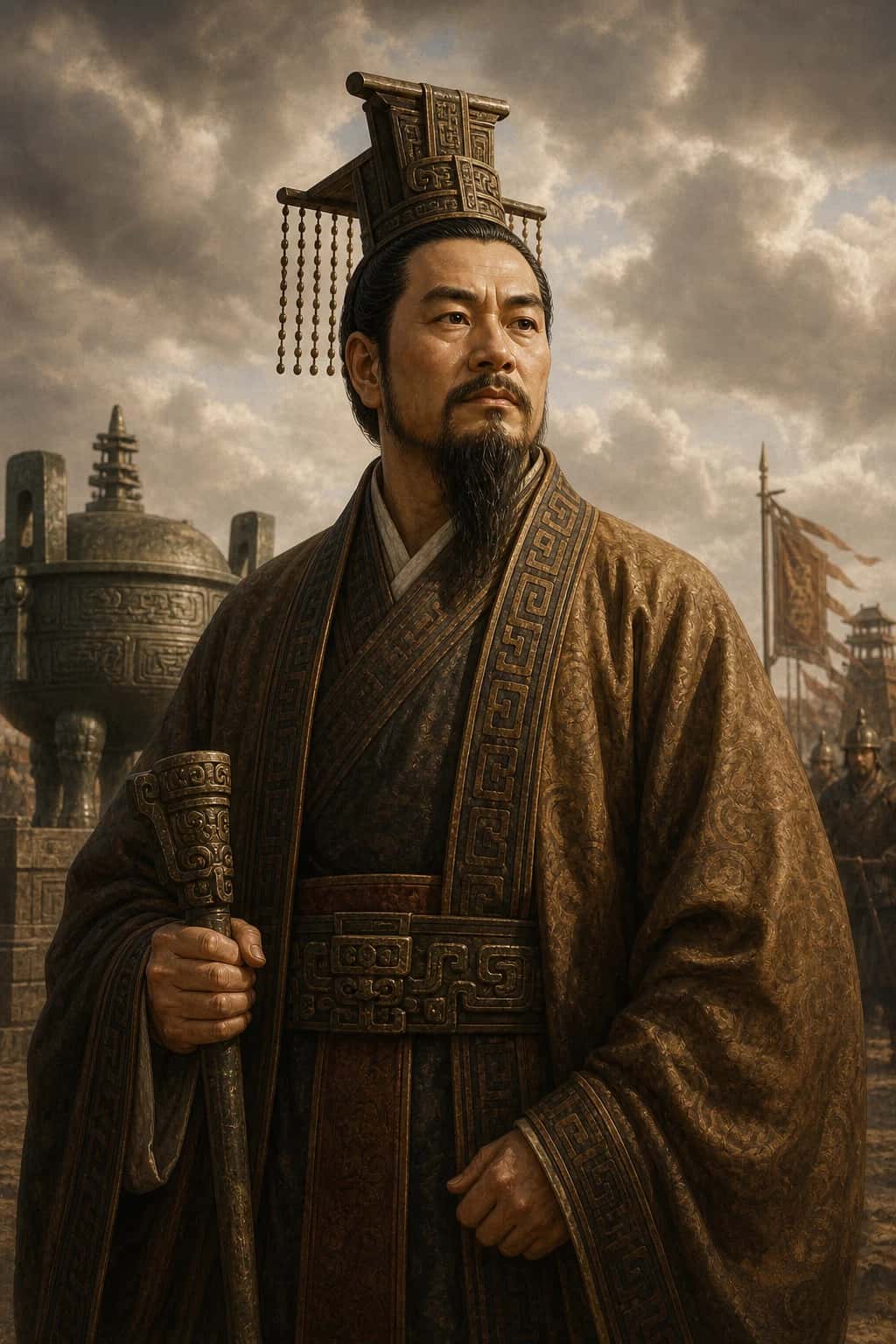
Shang Tang, also called Tang of Shang, is remembered as the traditional founder of the Shang Dynasty. He is usually described as the ruler who ended the Xia Dynasty by defeating Xia Jie, the last Xia king, and beginning Shang rule.
For beginners, his story is the classic early example of dynastic change in Chinese memory: a failing ruler loses authority, and a new founder claims to restore order.
Key Facts
- Identity
- Traditional founder of the Shang Dynasty
- Chinese Name
- 商汤
- Pronunciation
- Shāng Tāng
- Lived
- Traditional c. 17th-16th century BCE
- Dynasty
- Shang Dynasty
- Known For
- Defeating Xia Jie and founding Shang rule
- Historical Role
- An early model of justified dynastic replacement in Chinese memory
Quick Answer
Shang Tang was the traditional founder of the Shang Dynasty. In later Chinese history, he became famous as the capable ruler who overthrew the failing Xia king Jie and began a new dynasty.
His story matters because it helped shape one of the oldest political patterns in Chinese historical memory: a ruler who loses virtue and order can be replaced by a stronger house.
Name and Pronunciation
Shang Tang is written 商汤 in Chinese. "Shang" refers to the ruling house he founded, while "Tang" is the name by which later tradition remembers him.
English pages may also call him Tang of Shang. Both names point to the same early founder figure.
Early Life
Reliable details about Shang Tang's early life are limited. He belongs to a very early layer of Chinese tradition, so modern readers should not expect the kind of personal biography available for later emperors, generals, or officials.
Traditional accounts present him as a capable regional leader before he became a dynastic founder. His importance does not come from childhood stories, but from the way later memory contrasts him with Xia Jie: Tang is disciplined, responsive, and able to gather support, while Jie is remembered as excessive and destructive.
That contrast gives the story its force. Shang Tang is not only a conqueror in the tradition. He is the figure who appears when an old ruling house has lost trust.
Rise to Power
Shang Tang rose during the late Xia period. Traditional narratives describe Xia rule as weakening under Jie, whose court became associated with luxury, harshness, and poor judgment.
As Xia authority declined, Tang's power grew. Later accounts often connect his success with good advisers, especially Yi Yin, a minister remembered as helping Tang govern, plan, and present his challenge to Xia as more than simple ambition.
The decisive moment was the battle remembered as Mingtiao. Tang defeated Xia Jie and replaced the Xia with the Shang. Readers who want the broader transition can place this page beside the Shang Dynasty guide.
Timeline
Traditional late Xia era
Tang emerges as a Shang leader
Later tradition remembers him as a capable ruler whose influence grew as Xia authority weakened.
Traditional late Xia era
Yi Yin becomes associated with Tang's rise
Yi Yin appears in later accounts as an important adviser who helped Tang build political strength.
c. 1600 BCE in traditional chronology
Tang defeats Xia Jie
The battle remembered as Mingtiao marks the traditional end of Xia rule and the rise of Shang.
Early Shang memory
Tang becomes the model founder
Later tradition remembers him as a ruler who replaced failed rule and opened a new dynasty.
Major Achievements
1. He overthrew the Xia
Shang Tang's most famous achievement was defeating Xia Jie. In traditional history, this ended the Xia Dynasty and began the Shang.
The event mattered because it created one of the earliest examples of dynastic replacement in Chinese memory. A ruling house could fall, and a new one could claim that its victory restored order.
2. He founded the Shang Dynasty
Tang's victory established the Shang ruling house. The Shang later became the earliest Chinese dynasty supported by a large body of direct written evidence, especially oracle bone inscriptions from the later Shang period.
This does not mean every detail about Tang himself is equally secure. It means the dynasty linked to him became one of the most important bridges between traditional narrative and archaeological evidence in early China.
3. He became a model of capable founding rule
Later accounts present Tang as a ruler who listened to advice, corrected abuses, and acted with restraint. This image made him useful as a positive founder figure.
He stands opposite Xia Jie in much the same way that later tradition contrasts successful founders with failed last rulers. That larger pattern appears across many Chinese dynastic transitions.
4. He shaped later ideas of legitimate replacement
The full theory of the Mandate of Heaven became famous later, especially in the Zhou explanation of why Shang fell. But Shang Tang's story already shows an older narrative pattern behind that idea.
In this pattern, political power is not only inherited. It must be deserved. When a ruler harms the people and loses order, a new house can be remembered as restoring balance.
Why Is Shang Tang Important?
Shang Tang is important because he stands at one of the earliest major turning points in traditional Chinese history. His story links the end of the Xia, the rise of the Shang, and the wider question of why dynasties are allowed to replace one another.
He also matters because the Shang Dynasty became far more visible than the Xia through archaeology and writing. Later Shang evidence does not prove every detail of Tang's life, but it makes the dynasty he founded central to any beginner's path through early Chinese history.
For readers, Tang is best understood as both a founder figure and a political symbol. His story shows how early Chinese tradition explained the movement from failed rule to restored order.
Important People Around Shang Tang
Xia Jie
Xia Jie was the last ruler of the Xia Dynasty in traditional history. His negative image is essential to Tang's story, because Tang's rise was remembered as justified against Jie's failed rule.
Yi Yin
Yi Yin was the adviser most closely linked with Shang Tang in later tradition. He became a model minister: someone who could help a ruler govern wisely, plan effectively, and give moral shape to political action.
The Shang ruling house
Tang's achievement did not end with one battle. The royal house he founded had to turn victory into durable rule. Later Shang kings, capitals, rituals, and inscriptions gave the dynasty its lasting historical weight.
For the wider ruling line after Tang, see Who Ruled the Shang Dynasty?, which places Shang Tang beside Pan Geng, Wu Ding, Di Xin, and the succession patterns of Shang kingship.
Mistakes and Controversies
The main difficulty with Shang Tang is the evidence. The Shang Dynasty is historically real, and late Shang archaeology is especially strong. But Tang's own speeches, motives, court events, and exact actions come mainly through later transmitted tradition.
That means readers should avoid two extremes. It is too simple to treat every detail as modern-style biography. It is also too simple to dismiss Tang as unimportant. His story mattered deeply because later Chinese tradition used it to explain how legitimate rule begins.
Another issue is political storytelling. Founders are often remembered in a positive light, while the rulers they replace are remembered negatively. Shang Tang and Xia Jie fit that pattern, so their contrast should be read carefully.
Sources and Historical Tradition
Shang Tang's story comes mainly from transmitted texts and later historical accounts, not direct contemporary records from Tang's own reign. Textual traditions such as the Shangshu preserve early political memory around sage rulers, ministerial advice, and the right way to govern.
Sima Qian's Shiji places Tang within a larger historical sequence from early rulers through Xia, Shang, and Zhou. This helps later readers understand where Tang belongs in the traditional dynastic order.
Modern historians treat the details carefully. The later Shang is strongly supported by oracle bones, bronze vessels, royal tombs, and sites such as Yinxu, but Tang's founding narrative is older in memory than it is in direct evidence. The story is therefore most useful as both early historical tradition and political memory.
Death and Legacy
The details of Shang Tang's death are much less important in tradition than the dynasty he founded. He is remembered above all as the successful founder who replaced Xia and opened Shang rule.
His legacy continued in two directions. Historically, the Shang became one of the clearest early dynasties because later archaeology and inscriptions made its royal world visible. Politically, Tang became a model of the founder who rises when the old order has failed.
Readers can follow his legacy forward into why the Shang Dynasty fell and the rise of the Zhou Dynasty, where the language of legitimate replacement became even more explicit.
Simple Summary
- Shang Tang was the traditional founder of the Shang Dynasty.
- He is best known for defeating Xia Jie and replacing the Xia.
- His story helped shape early ideas about justified dynastic change.
- The Shang Dynasty he founded became much clearer through later archaeology and oracle bones.
- Modern readers should treat Tang as both a founder figure and a major figure in Chinese political memory.
FAQ
Who was Shang Tang?
Shang Tang was the traditional founder of the Shang Dynasty. Later Chinese history remembers him as the ruler who defeated Xia Jie and replaced the Xia.
Why is Shang Tang important?
Shang Tang is important because his story became one of China's earliest examples of a founder replacing failed rule and beginning a new dynasty.
Did Shang Tang really overthrow the Xia?
Traditional Chinese history says Shang Tang overthrew Xia Jie. Modern historians treat the broad Xia-Shang transition as important tradition, while noting that many details about Tang's own life come from later texts.
What dynasty did Shang Tang found?
Shang Tang founded the Shang Dynasty in traditional history. The later Shang is the earliest Chinese dynasty with a large body of direct written evidence.
How is Shang Tang connected to the Mandate of Heaven?
The Mandate of Heaven became famous later with the Zhou, but Shang Tang's story already shows the older pattern that a failed ruler could be replaced by a more legitimate house.