People
Cao Cao Explained: Power, Strategy, and Reputation
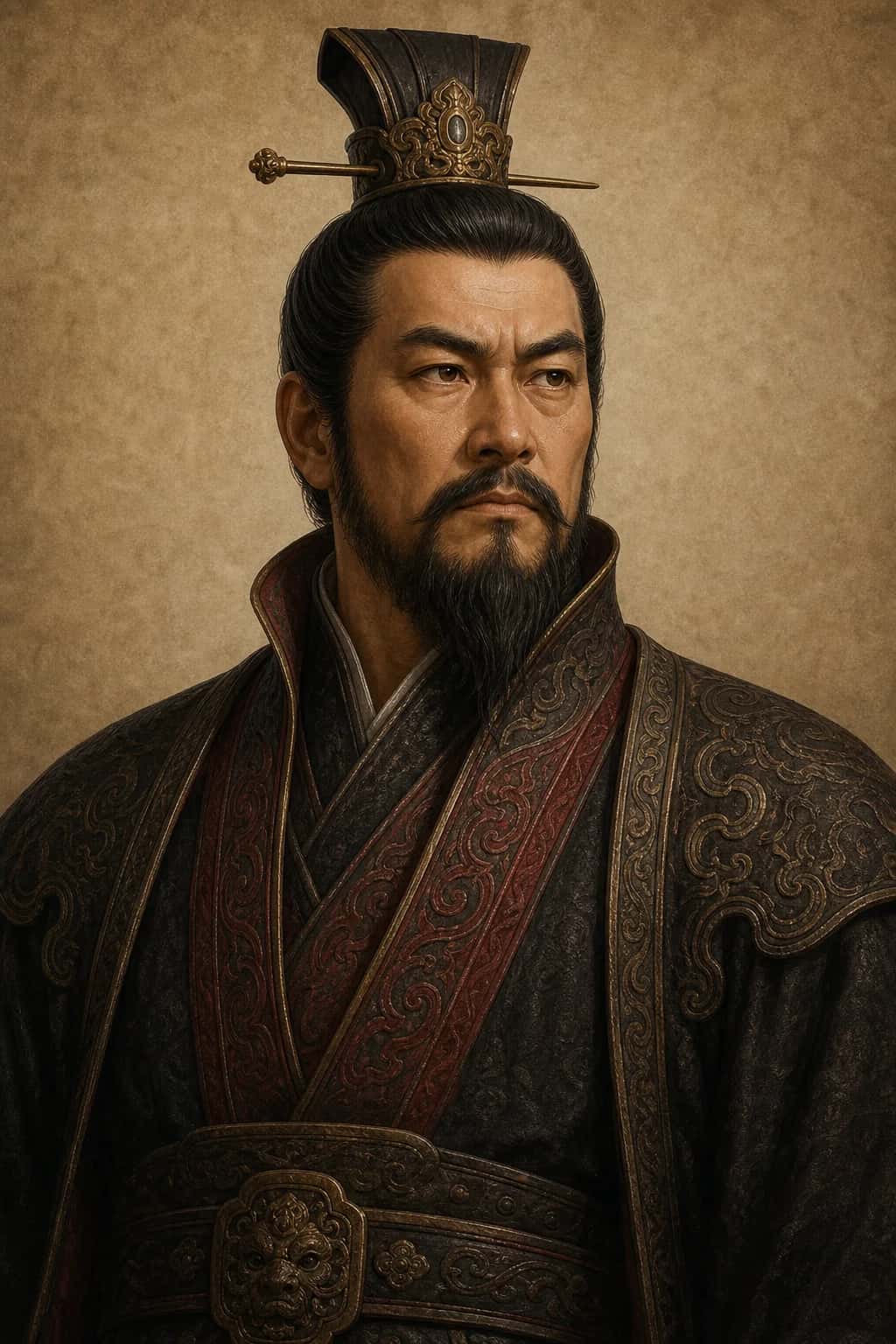
Cao Cao was one of the central figures at the end of the Han Dynasty. He controlled the Han emperor, rebuilt power in northern China, defeated major rivals, and laid the political foundation for the state of Wei. To understand Cao Cao is to understand how Han authority survived in name while real power moved into the hands of military strongmen.
Key Facts
- Identity
- Late Han warlord, statesman, commander, and founder of the Wei power base
- Chinese Name
- 曹操
- Pronunciation
- Cáo Cāo
- Lived
- 155-220 CE
- Dynasty
- Late Eastern Han
- Known For
- controlling Emperor Xian, defeating Yuan Shao at Guandu, unifying the north, and losing at Red Cliffs
- Historical Role
- He reorganized northern China and made Cao Wei possible, even though he never formally became emperor.
Quick Answer
Cao Cao was the most powerful northern leader during the final collapse of the Han Dynasty. He ruled in the emperor's name, but he also concentrated real authority in his own hands.
That is why his reputation remains so contested. He restored order in part of China, but he also helped make the Han throne politically hollow.
Early Life
Cao Cao came from an official family and grew up in a late Han world already under strain. Court eunuchs, imperial relatives, scholar-officials, and local strongmen were locked in recurring conflicts.
The Yellow Turban Rebellion made the problem worse. Local armies expanded, regional commanders gained power, and the central government could no longer easily control the empire.
Rise to Power
Cao Cao's decisive political move came in 196 CE, when he received Emperor Xian of Han at Xu. By controlling the emperor, he gained the ability to issue commands in the name of the Han court.
Chinese tradition often summarizes this as "holding the emperor to command the lords." The phrase can sound like a simple trick, but it describes a larger political reality: the emperor still mattered symbolically, while the person with troops and supplies held practical power.
Timeline
155 CE
Cao Cao was born
He came from an official family in the late Han world.
196 CE
He received Emperor Xian at Xu
This gave Cao Cao a powerful claim to act through the Han court.
200 CE
He defeated Yuan Shao at Guandu
The victory changed the balance of power in northern China.
208 CE
He lost at Red Cliffs
The defeat made quick southern unification impossible.
220 CE
Cao Cao died
His son Cao Pi soon replaced Han with Wei.
Major Achievements
1. He controlled the Han court
Cao Cao's control of Emperor Xian gave him a legitimacy that ordinary warlords lacked. He could appoint officials, issue orders, and frame his campaigns as service to the dynasty.
2. He defeated Yuan Shao at Guandu
At the Battle of Guandu, Cao Cao defeated Yuan Shao, a rival with greater resources. The victory opened the way for Cao Cao to dominate the north.
3. He unified northern China
After Guandu, Cao Cao gradually eliminated Yuan family remnants and other northern rivals. This gave Cao Wei its population, land, and administrative base.
4. He used talent and practical institutions
Cao Cao was willing to employ talented men from varied backgrounds. His military farms and administrative measures show a strongly practical style of rule.
Why Is Cao Cao Important?
Cao Cao matters because he turned late Han chaos into a powerful northern regime. He did not become emperor, but the state of Wei was built on the power he created.
He also raises a difficult historical question. In a collapsing dynasty, the person who restores order may also become the person who makes the old dynasty impossible to save. For the larger setting, read Han Dynasty Explained, Battle of Red Cliffs, and Emperor Xian of Han.
Important People Around Cao Cao
1. Emperor Xian of Han
Emperor Xian gave Cao Cao political legitimacy. Cao Cao protected the emperor, but he also controlled him.
2. Yuan Shao
Yuan Shao was Cao Cao's greatest northern rival. After Yuan Shao lost at Guandu, Cao Cao's northern dominance became possible.
3. Liu Bei and Sun Quan
Liu Bei and Sun Quan were the southern rivals Cao Cao could not simply absorb. After Red Cliffs, the road to unity became much harder.
Mistakes and Controversies
The central controversy around Cao Cao is whether he should be seen as a loyal minister or a usurping power-holder. He acted in the name of Han, but he also turned the Han emperor into a tool of his own regime.
His record also includes harsh decisions, suspicion, and ruthless political control. Later literature often made him into a villain, while historical readers usually see a more complex figure: capable, ambitious, practical, and dangerous.
Sources and Historical Tradition
Cao Cao's historical image comes mainly from the Records of the Three Kingdoms and Pei Songzhi's commentary. Later storytelling, especially Romance of the Three Kingdoms, made his image sharper and more theatrical.
For that reason, readers should separate two Cao Caos. The historical Cao Cao was a late Han statesman and military leader. The literary Cao Cao became a symbol of intelligence, suspicion, and hard ambition.
Death and Legacy
Cao Cao died in 220 CE. Soon after, his son Cao Pi forced Emperor Xian to abdicate and founded Wei. Cao Cao himself never took the imperial title in life, but he was posthumously honored by Wei.
His legacy sits at the threshold between Han and Three Kingdoms. He was both a repairer of order and an opener of a new political age.
Simple Summary
- Cao Cao was the strongest northern leader at the end of Han.
- He controlled Emperor Xian and used the Han court for legitimacy.
- His victory at Guandu made northern unification possible.
- His defeat at Red Cliffs helped produce the Three Kingdoms balance.
- His reputation remains divided between statesman, warlord, and ambitious usurper.
FAQ
Who was Cao Cao?
Cao Cao was a late Han warlord, statesman, and commander who controlled the Han court and built the power base that became Cao Wei.
Why is Cao Cao famous?
He is famous for controlling Emperor Xian, defeating Yuan Shao at Guandu, unifying northern China, and shaping the Three Kingdoms world.
Did Cao Cao become emperor?
No. Cao Cao never formally became emperor during his lifetime. His son Cao Pi later replaced Han with Wei.