Questions
How Did Yu the Great Control the Flood? The Strategy Behind Xia
How did Yu the Great control the flood? In traditional Chinese accounts, Yu controlled the flood by guiding water away through channels, dredging blocked waterways, opening routes toward the sea, and organizing people across a large landscape instead of only building barriers.
The key idea is simple: Yu did not try to defeat water by stopping it everywhere. Later tradition remembered him as the leader who studied where water needed to go, cleared paths for it, and turned flood control into a test of public service.
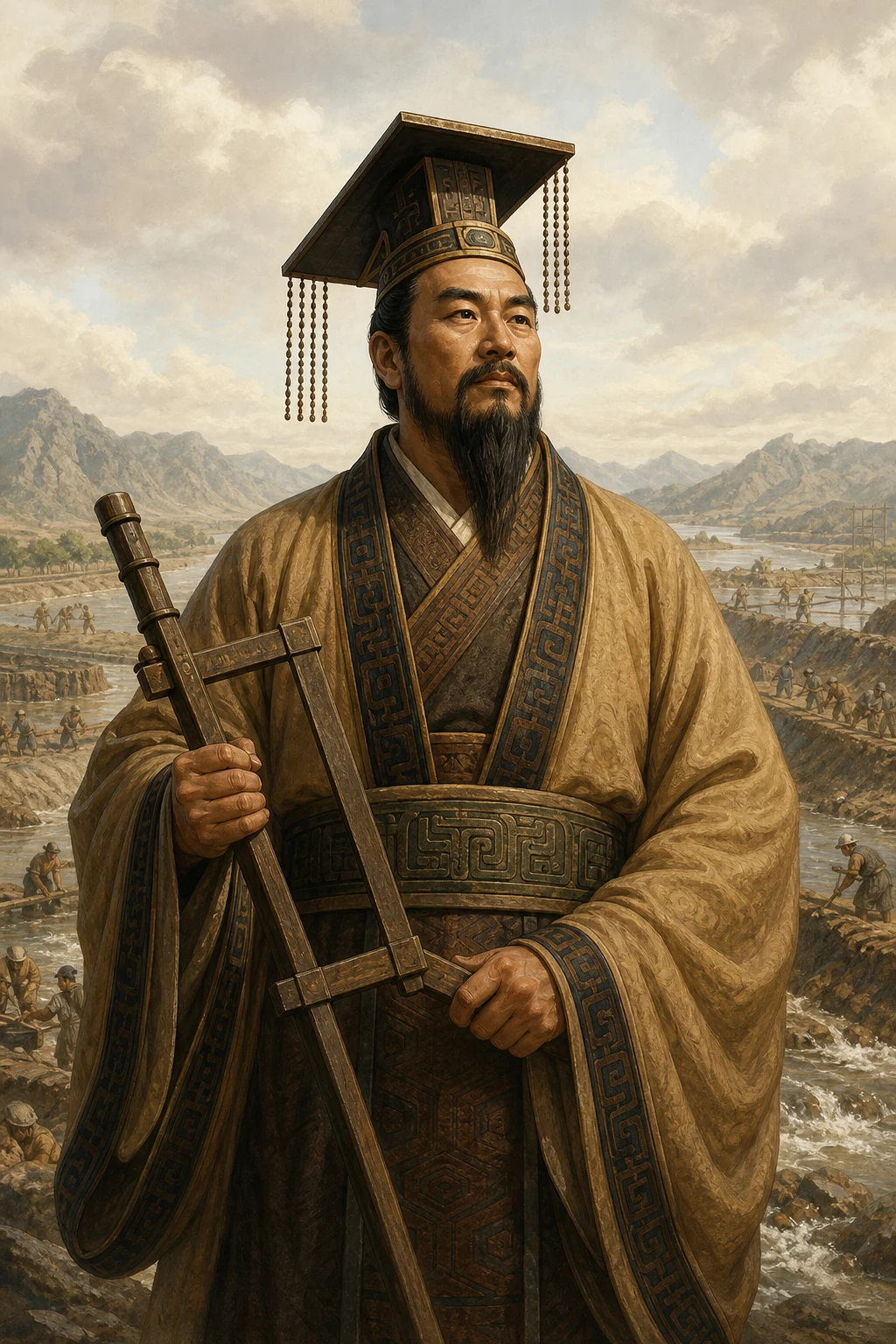
This image of Yu the Great shows why the flood story became more than a disaster tale. It made Yu a symbol of leadership that restores order when the world is unstable.
The Short Answer
Yu the Great controlled the flood by using diversion rather than simple blockage. Traditional stories say his father Gun had tried to hold back the waters, but that approach failed. Yu changed the method: he opened channels, cleared waterways, and helped floodwaters move through the land toward the sea.
This answer matters because the story is not only about ancient engineering. It explains why Yu gained authority. In the tradition, he solved a problem that threatened farming, settlements, and political order. That achievement made him central to the Xia Dynasty founding story.
For the broader person behind the story, see Yu the Great. For why his flood-control achievement became politically important, see Why Was Yu the Great Important?.
Why Gun's Method Failed
The flood-control story usually begins before Yu. Gun, Yu's father, is remembered as the first person sent to manage the disaster. His method was to block the water with embankments or barriers.
In the mythic logic of the story, that approach did not work because the water had nowhere reliable to go. If the water was only blocked in one place, it could rise, spread, or break through somewhere else. The problem was too large for a simple wall-like solution.
Yu's importance comes from changing the question. Instead of asking only how to stop the flood, he asked how water could be guided through the landscape. That shift made his work look more practical, more patient, and more organized.
Yu's Main Flood-Control Methods
1. He guided water instead of only blocking it
Yu's best-known method was to work with the direction of the water. Traditional accounts remember him opening paths, managing flow, and letting water move through channels rather than piling up behind barriers.
This is why many summaries describe Yu's method as dredging or channeling. The exact historical engineering cannot be reconstructed in modern detail, but the traditional contrast is clear: Gun blocked; Yu guided.
2. He dredged and cleared waterways
Dredging means removing silt, mud, or obstruction from waterways so water can pass through more easily. In Yu's story, this becomes a practical image of patient labor.
The point is not that Yu used one small trick. The point is that successful flood control required repeated clearing, digging, and organizing. Water management became a long project, not a single heroic action.
3. He opened routes toward lower ground and the sea
Traditional accounts often say Yu helped the waters find their proper courses. That idea turns flood control into a landscape problem. Rivers, channels, lowlands, and outlets all had to be considered together.
This is why Yu's work is remembered as large-scale coordination. The flood was not treated as one pond to drain. It was a wide crisis across many regions, so the solution had to connect local work with a bigger system.
4. He organized labor across many regions
Yu's success also depended on people. The story presents him as someone who traveled, inspected terrain, directed work, and coordinated communities.
That detail explains why flood control became a political story. Whoever could organize people to survive a crisis could also claim a special kind of authority. In later memory, Yu's ability to manage water also proved his ability to manage a realm.
5. He treated the flood as a long public duty
Yu is often remembered as working for years and placing public need above private comfort. Later tradition even says he passed his own home without entering because the flood-control task was too urgent.
Whether read as literal history or moral storytelling, this detail tells readers how Yu was meant to be understood. He was not only clever. He was disciplined, persistent, and devoted to restoring order.
What the Story Says About Early China
Yu's flood-control story belongs to a very early layer of Chinese memory. It should be read carefully. It is not documented in the same way as later imperial history, and modern readers should not treat every detail as a verified engineering report.
But that does not make the story meaningless. It preserves an important idea: early political authority was imagined as something earned by solving survival problems. Floods threatened fields, homes, roads, and ritual order. A leader who could manage water could be remembered as a leader who made society possible.
Later texts, including Sima Qian's Shiji, helped preserve Yu as a founding figure in the traditional dynastic sequence. Those accounts mix inherited memory, moral teaching, and political explanation. That mixture is exactly why the flood story became so influential.
How Yu's Flood Control Led Toward Xia
Yu's flood-control success is closely tied to the beginning of Xia in traditional history. After Yu restores order, later accounts place him near the transition from sage succession to dynastic kingship.
This does not mean modern historians can verify every Xia detail with the same confidence as later dynasties. It means the tradition used Yu's service to explain why Xia could begin. Authority was not supposed to appear from nowhere. It came from visible achievement.
That is why the flood story should be read together with What Was the First Chinese Dynasty?. The Xia question is partly about tradition, partly about evidence, and partly about how later Chinese history explained the start of kingship.
Common Misunderstandings
Did Yu simply build dams?
No. The usual traditional contrast is that Gun tried to block water, while Yu guided it. Yu's method is remembered as opening channels, clearing waterways, and directing water toward places it could drain.
Was Yu's flood control modern engineering?
No. The story should not be read as a modern technical manual. It is an ancient tradition about water management, leadership, and the origin of political authority.
Was the flood story pure history or pure myth?
It is better to treat it as traditional memory with mythic and political layers. The details are not all verifiable, but the story shows what early Chinese tradition valued in a ruler.
What Readers Should Conclude
Yu the Great controlled the flood, in traditional accounts, by changing the method from blocking to guiding. He cleared waterways, opened channels, coordinated labor, and helped the waters move through the landscape.
The bigger point is that Yu's success made flood control into a model of rightful rule. He became important because he restored order through service. That is why the story remained tied to Xia, kingship, and the beginning of China's dynastic tradition.
FAQ
How did Yu the Great control the flood in simple terms?
Yu the Great controlled the flood by guiding water through channels, dredging blocked waterways, and directing water toward the sea instead of only trying to block it.
Why did Yu's father Gun fail to control the flood?
Traditional accounts say Gun failed because he tried to block the water. Yu succeeded by changing the method and giving the water paths to flow away.
Did Yu the Great build dams?
Yu may be associated with embankments in some traditions, but his most famous method is diversion: opening channels, clearing waterways, and guiding floodwaters.
Why was Yu's flood control important?
It was important because it restored order in the story and gave Yu the authority later connected with the founding of the Xia Dynasty.
Is Yu the Great's flood story historically proven?
Not in every detail. Yu belongs to early Chinese traditional history, where myth, memory, political teaching, and possible memories of ancient water management are mixed.