People
Yu the Great: Flood Control Hero and Founder of the Xia Dynasty
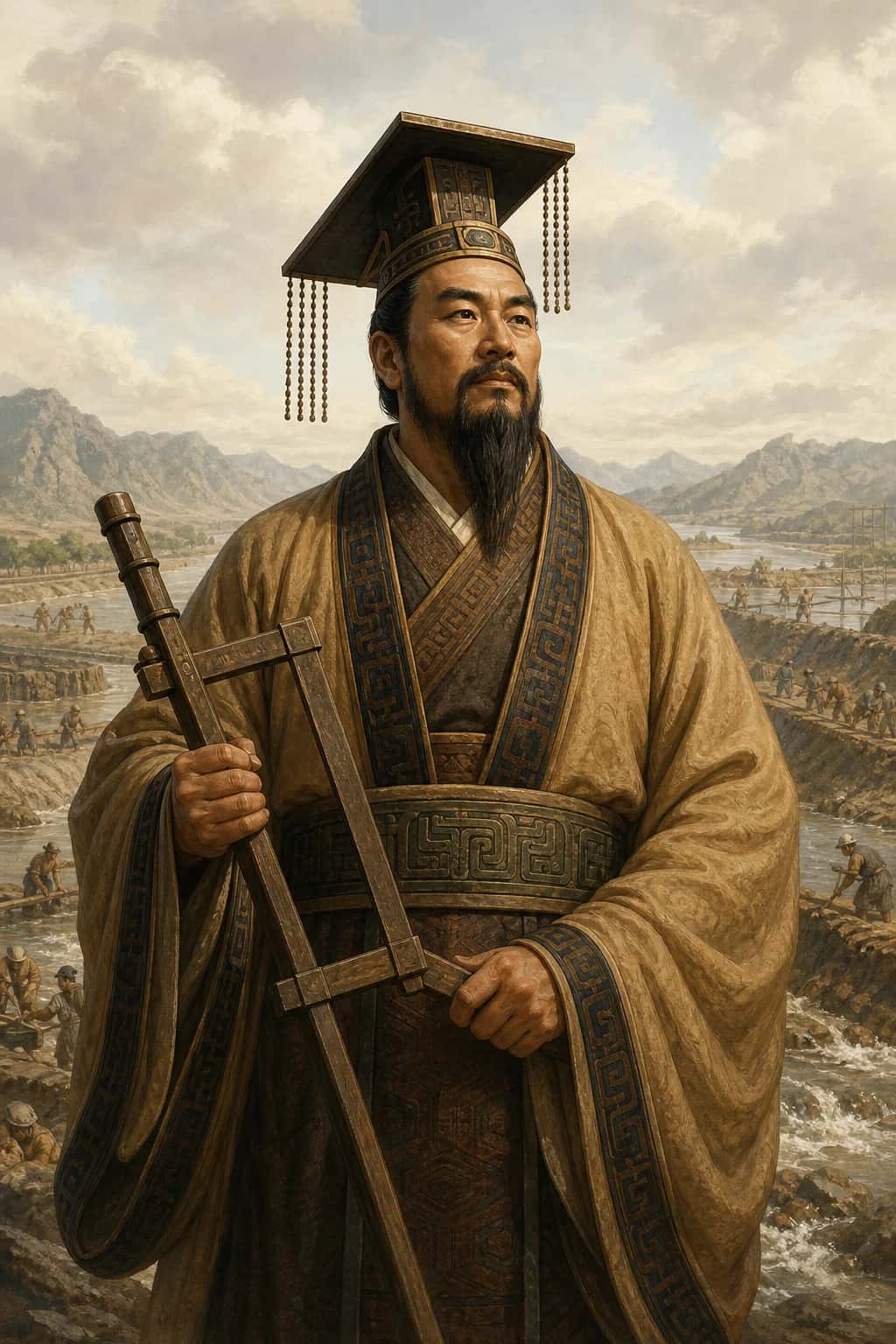
Yu the Great is remembered as the legendary flood-control hero and traditional founder of the Xia Dynasty. His story matters because it connects survival, hard work, and political authority at the very beginning of China's dynastic tradition.
Key Facts
- Identity
- Legendary flood-control hero and traditional founder of Xia
- Chinese Name
- 大禹
- Pronunciation
- Dà Yǔ
- Lived
- Traditional early 2nd millennium BCE
- Dynasty
- Xia Dynasty in traditional accounts
- Known For
- Controlling the Great Flood and founding Xia
- Historical Role
- A foundational model of useful and hardworking rulership
Quick Answer
Yu the Great was a legendary ruler in early Chinese tradition. He is best known for controlling a catastrophic flood and becoming the founding figure of the Xia Dynasty.
For beginners, Yu is important because his authority comes from service. In the traditional story, he earns the right to lead by solving a crisis that earlier leaders could not solve.
Early Life
Yu's early life belongs to a very old layer of Chinese tradition. Later texts describe him as the son of Gun, a figure who also tried to control the floods but failed.
That family background gives Yu's story its first tension. He does not begin as a comfortable ruler sitting above the crisis. He inherits a broken problem and has to prove himself through action.
Some versions connect his birth with strange or miraculous details. These details should be read as mythic tradition, not modern biography. Their purpose is to mark Yu as a figure who stands between the world of legendary sages and the beginning of dynastic history.
Rise to Power
Yu rose to power through flood control. Traditional accounts say that his father Gun tried to hold back the waters, while Yu succeeded by dredging channels and guiding water through the landscape.
The point is simple but powerful. Yu studies the shape of the problem, organizes labor, travels widely, and works for years. His authority grows because communities survive through his work.
Later tradition says the sage ruler Shun recognized Yu's achievement and placed him in a position of leadership. After Shun, Yu became the central figure linked with the founding of Xia.
Timeline
Before Yu's rise
Gun fails to control the flood
Traditional accounts present Yu's father as an earlier flood-control figure whose method does not succeed.
Traditional early 2nd millennium BCE
Yu redirects the waters
Yu becomes famous for using channels, movement, and organized labor rather than simply blocking the flood.
After the flood-control success
Yu gains political authority
His achievement turns practical service into a claim to leadership.
Traditional Xia beginning
Yu becomes the founding figure of Xia
Later historical memory places him at the beginning of China's first dynasty.
Later memory
Yu becomes a model ruler
Generations remembered him as a ruler who put public duty above private comfort.
Major Achievements
1. Controlled the Great Flood
Yu's most famous achievement was controlling the Great Flood. Traditional stories say he did this by opening channels, clearing waterways, and allowing the waters to move toward the sea.
This is why How Did Yu the Great Control the Flood? is the key follow-up question for his life story. The flood-control story is not only about water. It explains why Yu deserved authority.
2. Turned public service into political legitimacy
Yu's story made rulership look like a responsibility before it looked like a privilege. He becomes powerful because he works, endures hardship, and solves a problem that affects ordinary communities.
Later Chinese writers returned to this image again and again. A good ruler was expected to restore order, protect people, and act before comfort.
3. Became the traditional founder of the Xia Dynasty
Yu stands at the traditional beginning of the Xia Dynasty. Later histories treat Xia as the first dynasty in the Chinese dynastic sequence, and Yu is the figure who gives that beginning its moral force.
This does not mean every detail can be verified like later imperial history. It means Yu became central to the way China remembered the start of kingship.
4. Marked the shift toward hereditary rule
Yu also matters because the story after him changes the pattern of succession. Earlier sage rulers such as Yao and Shun are remembered for passing power to worthy successors. After Yu, power is said to pass to his son Qi.
That shift made Xia the traditional beginning of hereditary dynastic rule. Yu therefore stands at a hinge point between sage succession and family kingship.
5. Became a lasting symbol of endurance
One famous tradition says Yu passed by his own home three times without entering because the flood-control work was too urgent. Whether read literally or as moral memory, the meaning is clear.
Yu became a symbol of self-discipline, sacrifice, and public duty.
Yu's Place in Early Chinese History
Yu the Great is important because his story explains how political authority could be earned. In traditional memory, he does not become central only because of birth. He becomes central because he restores order during a crisis.
He also matters because he connects several major themes in early Chinese history: flood control, agriculture, organized labor, kingship, and the beginning of dynasty. Readers can place him inside the broader Chinese Dynasties Timeline and the opening story of the Xia.
Yu's importance is also moral. Later tradition used him as the opposite of rulers who became indulgent, cruel, or careless. That contrast becomes especially clear when Yu is compared with Xia Jie, the last Xia ruler blamed for dynastic collapse.
Important People Around Yu the Great
Gun
Gun was Yu's father in traditional accounts. He is important because his failed flood-control effort sets up Yu's success. The contrast between Gun and Yu helps the story explain why method, discipline, and persistence mattered.
Shun
Shun was the sage ruler who recognized Yu's achievement in later tradition. His role links Yu to the older world of moral succession, where authority should pass to the person most capable of serving the people.
Qi of Xia
Qi was Yu's son and successor in the Xia tradition. His succession is crucial because it marks the shift from choosing a worthy successor to passing power within a ruling family.
Xia Jie
Xia Jie was remembered as the last ruler of Xia. He belongs much later in the dynasty's story, but his negative image makes Yu's founding image sharper: Xia begins with service and ends, in later memory, with lost restraint.
Mistakes and Controversies
The main controversy around Yu the Great is historical uncertainty. Yu is central to traditional Chinese history, but modern historians cannot verify his life in the same way they can study later periods with inscriptions, administrative records, or securely dated texts.
The Xia itself is also debated. Many scholars connect the Xia tradition with early state formation in the Yellow River world, but the exact relationship between Yu, the Xia kings, and archaeological cultures remains uncertain.
There is another complexity inside the story. Yu is praised as a model of public service, but the tradition after him also leads toward hereditary kingship. For later readers, this made him both the last great figure of the sage-ruler world and the first great figure of dynastic rule.
Sources and Historical Tradition
Yu's story comes mainly from transmitted texts and later historical memory, not from direct contemporary records from his own lifetime. The Shangshu preserves early political traditions connected with sage rulers and flood control, while Sima Qian's Shiji places Yu within a later historical sequence that leads into the Xia Dynasty.
These sources are valuable because they show how later Chinese tradition understood Yu's role. They are not the same as archaeological inscriptions, administrative records, or securely dated documents from Yu's own period.
Modern readers should keep two levels separate. Yu is historically important as a figure in Chinese memory and political thought. The exact details of his life, dates, and actions are much harder to prove.
That caution does not make Yu unimportant. It helps explain why he should be read as both a legendary hero and a key figure in China's traditional memory of kingship.
Death and Legacy
The details of Yu's death are not firmly documented. Traditional accounts focus much more on what he accomplished and what happened to rule after him.
His legacy lasted because he gave early Chinese history one of its strongest images of rightful rule. A ruler should work through crisis, restore order, and place public need above private comfort.
Yu also remained important because his story made the Xia Dynasty meaningful. Readers who want the larger dynastic frame can continue with the Xia Dynasty, Why Was Yu the Great Important?, and Was the Xia Dynasty Real?.
Simple Summary
- Yu the Great is the legendary flood-control hero of early Chinese tradition.
- He is remembered as the traditional founder of the Xia Dynasty.
- His authority came from public service and practical achievement.
- His story marks the shift from sage succession toward hereditary kingship.
- Modern historians treat his exact biography carefully, but his place in Chinese memory is enormous.
FAQ
Who was Yu the Great?
Yu the Great was the legendary flood-control hero and traditional founder of the Xia Dynasty in early Chinese history.
What is Yu the Great famous for?
Yu the Great is famous for controlling the Great Flood by directing and channeling water rather than only trying to block it.
Was Yu the Great a real historical person?
Yu is central to traditional Chinese history, but modern historians debate how much of his exact biography can be verified.
Why did Yu the Great found the Xia Dynasty?
Traditional accounts say Yu gained authority because his flood-control work restored order, and that authority became connected with the beginning of the Xia Dynasty.
How is Yu the Great connected to Xia Jie?
Yu the Great is remembered as the founding figure of Xia, while Xia Jie is remembered as its failed last ruler. Together they frame the traditional rise and fall of the Xia Dynasty.