Questions
Why Was Yu the Great Important?
Why was Yu the Great important? The short answer is that Yu became one of early China's strongest models of useful rulership: a leader remembered for controlling catastrophic floods, earning authority through service, and standing at the traditional beginning of the Xia Dynasty.
Yu matters for five main reasons:
- He turned flood control into a story about public duty.
- He became the traditional founder of the Xia Dynasty.
- He helped explain why rulers should earn authority through action.
- His story marks the shift from sage succession toward hereditary kingship.
- He remained a long-lasting model of hardworking and responsible rule.
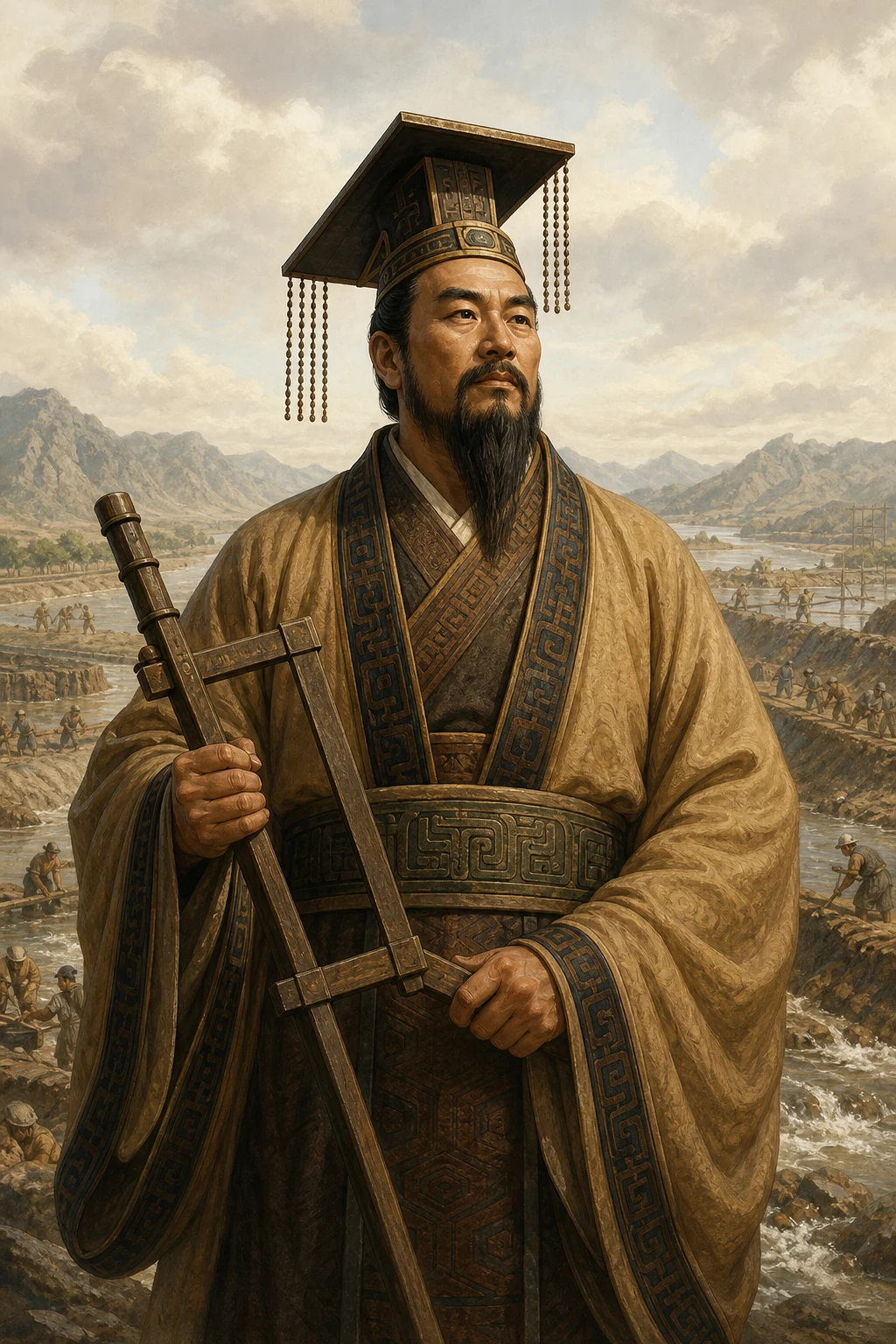
This image of Yu the Great shows why later memory treated him as more than a legendary flood hero. He became a symbol of leadership that restores order during crisis.
Why Yu the Great matters in early Chinese history
Yu the Great matters because his story sits at the border between mythic antiquity and the beginning of dynastic history. He is not important only as a single legendary ruler. He is important because later Chinese tradition used him to explain how political authority could begin.
In the older sequence, rulers such as Yao and Shun are remembered as sage leaders who pass power to worthy successors. Yu continues that world because he earns trust through service. But he also points toward a new world, because the Xia tradition later connects him with the beginning of dynastic rule.
Readers who want the clearest path through this cluster can start with:
Five reasons Yu the Great still matters
1. He turned flood control into a story about public duty
Yu is most famous for controlling the Great Flood. In traditional accounts, he succeeds where earlier efforts fail because he works with the flow of water rather than simply trying to block it.
That detail matters because the story is not only about engineering. It presents Yu as a leader who studies the problem, organizes labor, travels through difficult terrain, and puts public survival ahead of personal comfort. Flood control becomes a moral test of leadership.
2. He became the traditional founder of the Xia Dynasty
Yu is important because he stands at the traditional beginning of the Xia Dynasty. Later histories treat Xia as the first dynasty in the Chinese dynastic sequence, and Yu is the founding figure most closely tied to it.
Modern readers should keep the evidence issue in mind. Yu belongs to early tradition, not to a period with the same direct records we have for later dynasties. Even so, his role in the Xia story made him central to how Chinese history explained the start of kingship. For the larger first-dynasty question, see What Was the First Chinese Dynasty?.
3. He helped define rightful rule as useful action
Yu's importance is also political. His authority is remembered as something earned through achievement, not simply claimed by birth.
This made him a powerful example for later writers. A ruler should not only possess a title. He should restore order, protect people, and solve problems that ordinary communities cannot solve alone. Yu became an early image of rule justified by service.
4. His story marks a shift toward hereditary kingship
Yu's story also matters because it leads into one of the biggest changes in early Chinese political memory. Before Xia, tradition often emphasizes abdication to the worthy. After Yu, power is said to pass to his son Qi, making kingship hereditary.
That shift did not make Yu less important. It made him a hinge figure. He belongs to the age of sage service, but his family line becomes linked with the beginning of dynasty. This is one reason the Xia story remains so important in early Chinese history.
That next step is developed in Xia Dynasty: How the First Hereditary Kingdom Took Shape, which follows the move from Yu's authority to Qi's hereditary succession. For the broader meaning of that shift, see Why Is the Xia Dynasty Important in Chinese History?.
5. He became a model of endurance and self-discipline
Later tradition remembered Yu as a leader who worked for years on flood control and even passed his own home without entering because the task was too urgent. Whether read as literal history or moral memory, the point is clear.
Yu represented self-discipline. He showed what later writers wanted from an ideal ruler: focus, endurance, humility before a crisis, and a willingness to place public need above private comfort.
What Yu changed afterward
Yu changed later Chinese history less through one verified policy than through the pattern his story created. He made rulership look like a responsibility before it looked like a privilege.
That pattern shaped how later generations judged rulers. Strong rulers could be praised as people who restored order. Failed rulers could be criticized for forgetting the public duty that figures like Yu represented.
Yu also gave the Xia story its moral beginning. Later accounts of Xia decline, especially the fall of King Jie, are easier to understand when placed against Yu's founding image. The dynasty begins with service and ends, in later tradition, with the loss of restraint and legitimacy.
How we know Yu was important
Yu's importance is visible through how often later tradition returned to him. He appears in major inherited accounts of early China as the flood-control hero, the successor to Shun, and the founding figure of Xia.
This does not mean every detail can be proved in the modern historical sense. Yu stands in a very early layer of Chinese memory, where myth, political teaching, and possible memories of ancient water management are deeply mixed.
That mixture is exactly why he matters. Yu helps readers see how early Chinese tradition explained the origin of political order: people faced disorder, a capable leader restored stability, and that achievement became the basis for rule.
Readers can place this page together with:
- Yu the Great
- Xia Dynasty
- What Was the First Chinese Dynasty?
- Why Is the Xia Dynasty Important in Chinese History?
- Xia Dynasty: How the First Hereditary Kingdom Took Shape
Common misunderstandings about Yu's importance
Was Yu important only because he controlled the flood?
No. Flood control is the center of his fame, but his importance is larger than that. The flood story explains why he deserved authority, why the Xia tradition could begin with him, and why later writers treated useful service as a foundation of rightful rule.
Was Yu the Great a fully documented historical ruler?
Not in the same way as later rulers. Yu belongs to early traditional history, where later texts, political memory, and legendary storytelling are mixed. Careful readers should treat him as a foundational traditional figure whose exact historical details remain debated.
Did Yu rule all of China like a later emperor?
No. Yu should not be imagined as ruling the full territory of later imperial China. His story belongs to a much earlier world, centered on the formation of order, kingship, and remembered authority in early Chinese tradition.
What readers should remember
Yu the Great matters because he connects crisis, service, kingship, and dynastic memory. He is remembered as the leader who brought water under control, earned authority through action, and stood at the beginning of the Xia tradition.
If you remember one thing, remember this: Yu's importance is not just that he was ancient. It is that his story taught later Chinese history what a rightful ruler was supposed to do.
FAQ
Why was Yu the Great important in simple terms?
Yu the Great was important because he was remembered as the leader who controlled the Great Flood, founded the Xia Dynasty in tradition, and showed that rulers should earn authority by serving the people.
What was Yu the Great's most important achievement?
His most important achievement was controlling the Great Flood in traditional accounts. That success gave him the authority later connected with the founding of the Xia Dynasty.
How did Yu the Great affect later Chinese history?
Yu shaped later Chinese political memory by becoming a model of hardworking rule, public duty, and authority earned through practical achievement.
Was Yu the Great the founder of the Xia Dynasty?
In traditional Chinese history, Yu the Great is treated as the founding figure of the Xia Dynasty, though modern historians debate how much of the early Xia story can be verified.
Why is Yu the Great connected with flood control?
He is connected with flood control because traditional accounts say he organized a successful effort to redirect and manage floodwaters after earlier attempts failed.