People
Liu Xiu: Emperor Guangwu and Founder of Eastern Han
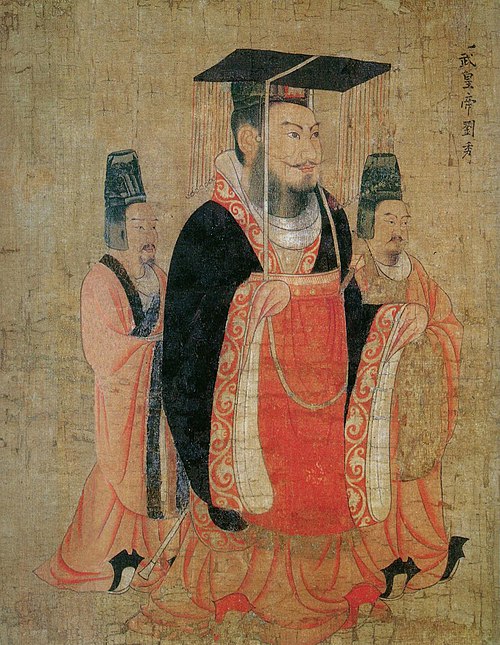
Liu Xiu (刘秀), also known as Emperor Guangwu of Han, was the founder of Eastern Han and the ruler who restored Han rule after Wang Mang's Xin dynasty collapsed. He came from a distant branch of the Liu imperial family, survived years of civil war, built his own base in Hebei, and became emperor in 25 CE.
His story is not simply a return to the past. Liu Xiu had to make the Han name work again after the old Western Han line had broken, Wang Mang had failed, and many armed groups were competing for power. His achievement was turning restoration into a functioning state.
For context, start with:
- Liu Bang, the founder of Western Han.
- Emperor Ming of Han, Liu Xiu's successor.
- The Han Dynasty guide, for the wider dynasty.
Key Facts
- Identity
- founder of Eastern Han and emperor later known as Guangwu
- Chinese Name
- 刘秀
- Pronunciation
- Liú Xiù
- Ethnicity
- Han Chinese
- Lived
- 5 BCE-57 CE
- Dynasty
- Eastern Han
- Reign
- 25-57 CE
- Emperor Order
- Han emperor number 16; Eastern Han emperor number 1
- Best Known For
- Kunyang, Hebei power-building, founding Eastern Han, defeating rival regimes, and the Guangwu Restoration
- Historical Role
- He rebuilt the Han state after Wang Mang and shifted the dynasty into its Eastern Han phase.
Who Was Liu Xiu?
Liu Xiu was the founder of Eastern Han and the emperor later remembered as Emperor Guangwu of Han. He rose during the collapse of Wang Mang's Xin regime, became famous after the Battle of Kunyang, and gradually turned a regional base in Hebei into a restored Han dynasty.
His reign is called the Guangwu Restoration because it focused on rebuilding order after long war. That meant defeating rivals, restoring administration, reducing burdens, and managing powerful local elites.
Liu Xiu and Emperor Guangwu: Are They the Same Person?
Yes. Liu Xiu was his personal name. Emperor Guangwu of Han is the imperial title by which later tradition usually remembers him.
The distinction matters because English searches often use both forms. A reader looking for Liu Xiu is usually looking for the same ruler described in emperor lists as Emperor Guangwu, the first emperor of Eastern Han.
Early Life
Liu Xiu was a descendant of the Western Han imperial clan, but not a prince close to the center of power. His line traced back to Liu Fa, Prince Ding of Changsha, a son of Emperor Jing of Han.
By Liu Xiu's lifetime, that ancestry gave him a useful name but not automatic power. He grew up far from the highest court struggles and was remembered as more cautious than his older brother Liu Yan.
Later stories also remember his youthful wish to hold a respectable capital post and marry Yin Lihua. That detail matters because it shows a young man who did not begin with an obvious path to empire.
Rising Against Wang Mang
Wang Mang's Xin regime faced policy failure, famine, and expanding rebellion. Liu Xiu and his brother joined the anti-Wang movement from the Nanyang region and became part of the wider forces that supported the Gengshi Emperor.
The Battle of Kunyang in 23 CE made Liu Xiu famous. Facing a much larger Xin army, he broke out, gathered help, and helped turn the battle into a defeat for Wang Mang's forces. After Kunyang, the Xin regime's military position collapsed rapidly.
Success did not make Liu Xiu safe. His brother Liu Yan was killed by the Gengshi regime. Liu Xiu survived by suppressing his anger and lowering his profile, a cold but crucial act of political patience.
Building a Base in Hebei
Liu Xiu's decisive opportunity came when he was sent to Hebei. The Gengshi court expected to use him, but the assignment gave him space to build his own power.
Hebei was politically messy. Local elites, armed groups, refugees, and rival claimants competed for control. Liu Xiu defeated Wang Lang, absorbed forces such as the Tongma troops, and drew capable men into his circle.
This phase turned Liu Xiu from a famous general into an independent contender. By the time he claimed the imperial title in 25 CE, he had more than a surname. He had territory, followers, military capacity, and a political base.
Timeline
5 BCE
Liu Xiu was born into a distant branch of the Liu clan
Late Xin
He joined rebellion against Wang Mang with Liu Yan
23 CE
The Battle of Kunyang made him a major anti-Xin figure
After 23 CE
Liu Yan was killed and Liu Xiu survived Gengshi politics
24 CE
He built an independent base in Hebei
25 CE
Liu Xiu became emperor and founded Eastern Han
36 CE
Eastern Han largely completed reunification
57 CE
Liu Xiu died and Liu Zhuang succeeded him
Founding Eastern Han
In 25 CE, Liu Xiu took the imperial title and began the Jianwu era. This did not mean the empire was already unified. It meant he had claimed the Han restoration as his own political project.
He later took Luoyang and made it the Eastern Han capital. The move mattered geographically and symbolically. The Han dynasty continued, but its center of gravity shifted from Western Han Chang'an to Eastern Han Luoyang.
Major Achievements
Winning the Restoration War
Liu Xiu still faced the Red Eyebrows, Liu Yong, Peng Chong, Wei Xiao, Gongsun Shu, and other regional powers. Eastern Han unity took years of war, surrender, diplomacy, and administration.
By 36 CE, the major rival regimes had been defeated or absorbed. The Han name had become a working empire again, not only a slogan.
Rebuilding After Civil War
After reunification, Liu Xiu turned toward recovery. He reduced burdens, released some enslaved people, eased punishments, cut demands where possible, and tried to restore agriculture and household registration.
This was not as dramatic as conquest, but it was the heart of the Guangwu Restoration. A state damaged by war needed people back on the land, taxes that could be collected, and institutions that could function without constant military crisis.
Managing Powerful Local Elites
Liu Xiu's government also had to deal with powerful local families. War had allowed many elites to gather land and dependents, while the court's records of land and households were often unreliable.
The land-registration effort known as dutian shows this tension. It aimed to help the state understand land and population more accurately, but it touched elite interests and could provoke resistance. Guangwu's restoration was therefore not only gentle recovery; it was also negotiation with entrenched local power.
People Around Liu Xiu
Liu Yan, his older brother, shaped Liu Xiu's early political life. Liu Yan was more outwardly bold, and his death taught Liu Xiu how dangerous allied politics could be.
Yin Lihua and Guo Shengtong mattered both personally and politically. Guo Shengtong helped stabilize Liu Xiu's Hebei alliances, while Yin Lihua later became empress. The succession from Guo's son Liu Qiang to Yin's son Liu Zhuang shows how family choices affected early Eastern Han politics.
Advisers and generals such as Deng Yu, Feng Yi, and Geng Yan helped Liu Xiu turn scattered opportunity into a state. Later memory grouped many founding supporters as the Yuntai generals, a reminder that Eastern Han was built by a whole political and military network.
Why Liu Xiu Still Matters
Liu Xiu matters because he made restoration real. Many people in the chaos after Wang Mang could claim the Han name. Liu Xiu was the one who converted that claim into a dynasty that lasted nearly two more centuries.
He also gives readers a contrast with Liu Bang. Liu Bang founded Han after Qin collapsed. Liu Xiu rebuilt Han after it had already broken once. Both men succeeded through survival, talent management, patience, and order-building rather than battlefield force alone.
Mistakes and Controversies
Liu Xiu is often remembered as restrained, capable, and humane. That reputation has a historical basis, but it should not turn him into a flawless restoration hero.
He could be cold when survival required it, as his reaction after Liu Yan's death shows. His unification wars involved pressure as well as persuasion. His handling of officials and accusations in later years also shows that even a careful ruler could misjudge people.
Keeping that complexity makes Liu Xiu more useful for history. He was not a simple model emperor. He was a realistic political founder trying to rebuild a country after collapse.
Historical Sources and Traditional Memory
Liu Xiu's career is mainly known through the Book of the Later Han and later historical tradition. These sources preserve a clear outline of his lineage, wars, reign, and restoration policies.
They also present him as a legitimate restorer. A careful reading should respect that tradition while still noticing the military, elite, and administrative problems that made Eastern Han hard to rebuild.
Death and Legacy
Liu Xiu died in 57 CE after more than three decades on the throne. He was succeeded by his son Liu Zhuang, remembered as Emperor Ming of Han.
His legacy is the survival of the Han name after a real dynastic break. Western Han had ended, Xin had failed, and the empire had fractured. Liu Xiu made Eastern Han possible by turning restoration from a family claim into a working political order.
Simple Summary
- Liu Xiu was Emperor Guangwu of Han and the founder of Eastern Han.
- He rose during the collapse of Wang Mang's Xin regime.
- Kunyang made him famous, but Hebei gave him an independent base.
- His reign focused on reunification and recovery after civil war.
- The Guangwu Restoration was both a political achievement and a difficult process of rebuilding state order.
FAQ
Who was Liu Xiu?
Liu Xiu was the founder of Eastern Han and the emperor later known as Emperor Guangwu of Han. He restored Han rule after Wang Mang's Xin dynasty collapsed.
Why is Liu Xiu important?
Liu Xiu is important because he turned the Han restoration from a claim into a functioning dynasty. His reign began the Eastern Han period.
What was the Battle of Kunyang?
The Battle of Kunyang was a major victory over Wang Mang's forces in 23 CE. It made Liu Xiu famous and helped bring the Xin regime closer to collapse.
What does Guangwu Restoration mean?
The Guangwu Restoration refers to Liu Xiu's rebuilding of Han rule after civil war, including reunification, lighter burdens, recovery policies, and renewed administration.
How was Liu Xiu related to Liu Bang?
Liu Xiu was a descendant of the Han imperial Liu clan. Liu Bang founded Western Han, while Liu Xiu restored Han rule and founded Eastern Han centuries later.