People
Liu Bang: Founder of the Han Dynasty
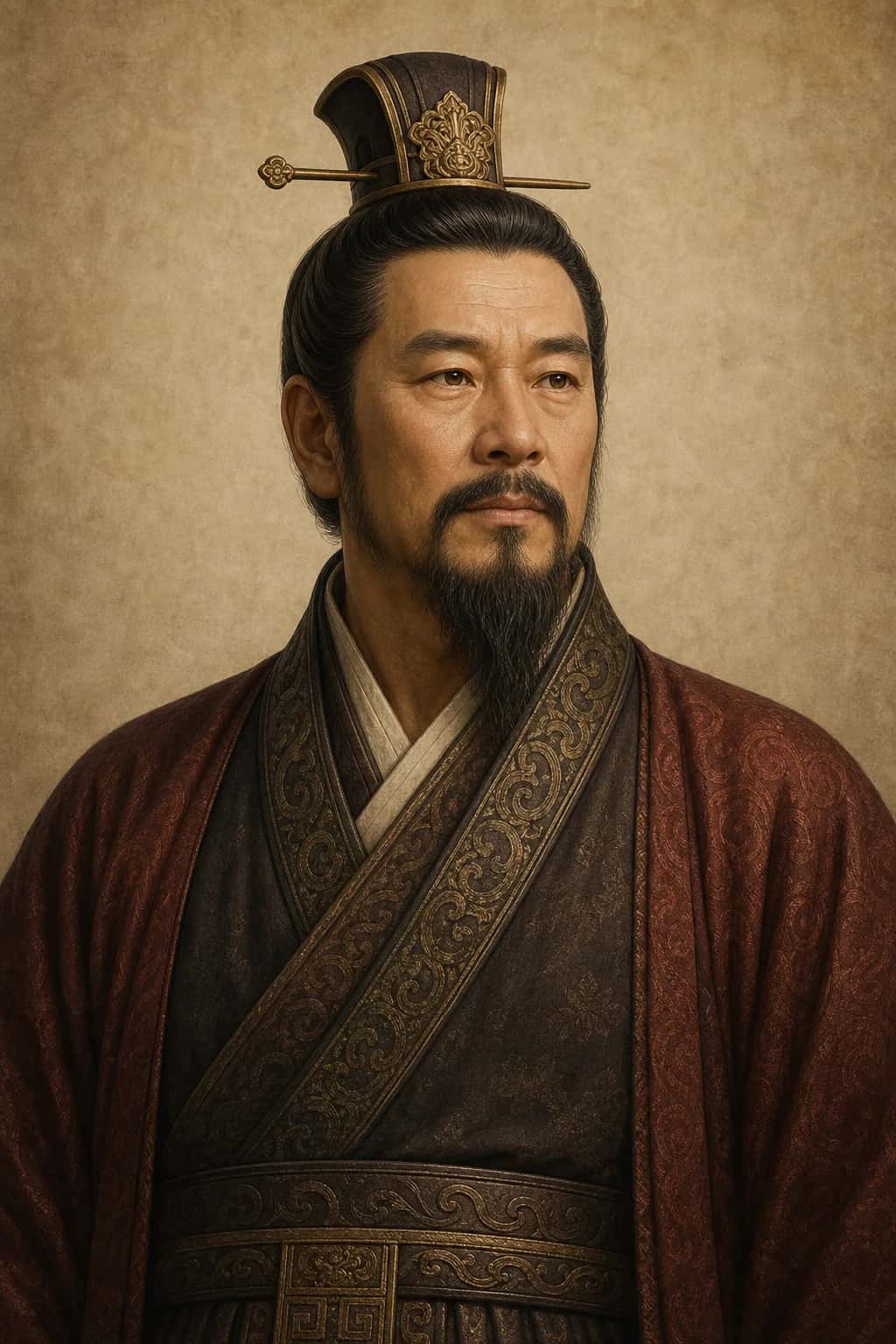
Liu Bang (刘邦), later known as Emperor Gaozu of Han, was the founder of the Han Dynasty. He began as a low-ranking local figure under Qin, entered the anti-Qin wars, survived the deadly politics around Xiang Yu, and turned civil war into a new imperial order.
He was not the most aristocratic man in the struggle, and he was not the most terrifying battlefield commander. That is exactly why his victory matters. Liu Bang won because he survived, used talent well, accepted retreat when needed, and understood how to turn conquest into government.
For the larger story, read him with Emperor Hui of Han, Liu Xiu, and the Han Dynasty guide. For the narrower step-by-step search question, use How Did Liu Bang Become Emperor?.
Key Facts
- Identity
- founder of the Han Dynasty and first emperor of Western Han
- Lived
- c. 256-195 BCE
- Reign
- 202-195 BCE
- Emperor Order
- Han emperor number 1; Western Han emperor number 1
- Best Known For
- entering Guanzhong first, surviving the Hongmen Banquet, defeating Xiang Yu, and founding Han
- Historical Role
- He converted the collapse of Qin and the Chu-Han struggle into a durable imperial dynasty.
Quick Answer
Liu Bang was the rebel leader who defeated Xiang Yu and founded the Han Dynasty in 202 BCE. As Emperor Gaozu of Han, he became the first ruler of Western Han.
His importance lies in more than winning a war. Liu Bang proved that a leader from outside the old aristocratic elite could gather people, manage rivals, keep a base alive, and build a new imperial order after Qin collapsed.
Early Life and Background
Liu Bang came from Pei County, in the region of present-day Jiangsu. He was not a grand noble like Xiang Yu, who came from a famous Chu military family. Liu Bang's background was closer to the local society that had to live under Qin administration.
He served as a minor Qin official, often described as a pavilion chief. The post was modest, but it gave him experience with local people, labor service, law, fear, and obligation. In a collapsing empire, that kind of practical knowledge mattered.
This background helps explain his later style. Xiang Yu inspired awe. Liu Bang was better at drawing people in, keeping them useful, and surviving long enough for the next opportunity.
From Local Official to Anti-Qin Leader
When Qin rule began to break apart, Liu Bang entered the wider anti-Qin movement. At first, he was not the most famous rebel and did not command the strongest army.
His advantage was adaptability. He took chances, gathered followers, accepted help from stronger minds, and kept moving when the political map changed. Many rivals could win a dramatic battle. Liu Bang's gift was staying in the game.
Entering Guanzhong
Liu Bang's first great breakthrough came when he entered Guanzhong, the Qin heartland, before Xiang Yu. This was more than a military success. Guanzhong held the old imperial center, including Xianyang, and whoever entered it first faced the question of who would inherit the empire.
Liu Bang's conduct there also mattered. He had to show that he was not simply another force of destruction. By presenting himself as a ruler who could restrain violence and win support, he began to look different from leaders who only knew how to smash the old order.
Timeline
Late Qin
Liu Bang moved from local office into rebellion
206 BCE
He entered Guanzhong and reached the Qin center
206 BCE
He survived the Hongmen Banquet under Xiang Yu's shadow
206-202 BCE
The Chu-Han struggle pitted Liu Bang against Xiang Yu
202 BCE
Liu Bang defeated Xiang Yu and founded the Han Dynasty
200 BCE
The Baideng crisis exposed early Han weakness against the Xiongnu
195 BCE
Liu Bang died and Liu Ying succeeded him
The Hongmen Banquet
After Liu Bang entered Guanzhong, Xiang Yu's army arrived with overwhelming force. The famous Hongmen Banquet was not just a banquet. It was a political trap in which Liu Bang could easily have been killed.
Liu Bang survived because he knew when to lower himself, when to apologize, and when to escape. The episode shows one of his defining traits: he cared less about appearing heroic in the moment than about staying alive for the larger struggle.
That ability was not glamorous, but it was decisive. A dead rival cannot found a dynasty. Liu Bang's willingness to bend kept his future open.
Why Liu Bang Defeated Xiang Yu
Liu Bang did not defeat Xiang Yu because he was the stronger warrior. He won because he was better suited to turning war into rule.
He used people well. Xiao He sustained administration and supply. Zhang Liang helped with strategy. Han Xin delivered major military victories. Liu Bang's own greatness lay partly in knowing that he did not need to do every job himself.
He also knew how to endure. He lost battles, retreated, negotiated, and rebuilt. Xiang Yu could dominate a battlefield, but Liu Bang could turn time, geography, allies, and resources into a long contest that favored him.
Finally, Liu Bang was better at rebuilding order. After Qin, people did not only need another conqueror. They needed a regime that could distribute rewards, secure territory, and make government work again.
Founding the Han Dynasty
In 202 BCE, Liu Bang defeated Xiang Yu and became emperor. The new Han Dynasty did not reject every Qin institution. It kept useful parts of the imperial framework, including commanderies, counties, bureaucracy, and central authority.
The difference was political tone. Liu Bang's government tried to make imperial rule more survivable after Qin's harsh collapse. That did not make the early Han peaceful or simple, but it helped the new dynasty last.
Rule, Rewards, and New Dangers
Winning the empire created new problems. Liu Bang had to reward the men who helped him win while preventing powerful followers from becoming independent threats.
That tension shaped his reign. Figures such as Han Xin, Ying Bu, and Peng Yue had helped make Han victory possible, but great military power could become dangerous after unification. Liu Bang's founder years were therefore filled with both gratitude and suspicion.
The Baideng crisis in 200 BCE also showed that the new dynasty was not yet invincible. Liu Bang was trapped by Xiongnu forces, a reminder that Han still faced serious frontier pressure after years of civil war.
What Kind of Leader Was Liu Bang?
Liu Bang was a political realist. He could accept humiliation if survival required it. He could retreat from a bad position and return later with better conditions.
He was also a talent manager. He was not the greatest general in his own camp, but he knew the value of people who were better than him at specific tasks.
Most of all, he was an integrator. He gathered people from different backgrounds, interests, and skills into a new political order. That quality made him more than the winner of a duel with Xiang Yu. It made him a founder.
Why Liu Bang Still Matters
Liu Bang matters because he caught the world after Qin fell. Qin had unified China but collapsed quickly. Liu Bang's Han showed that unification could be rebuilt into a longer-lasting dynasty.
His career also gives beginners one of the clearest contrasts in Chinese history: Xiang Yu was the more dazzling warrior, but Liu Bang was the better founder. The empire went to the man who could survive, delegate, compromise, and govern.
Historical Sources and Traditional Memory
Liu Bang's life is mainly known through traditional histories such as the Shiji and the Book of Han. These sources preserve the narrative frame for Liu Bang, Xiang Yu, Han Xin, Xiao He, Zhang Liang, and the Chu-Han struggle.
They are invaluable, but they also carry traditional judgments and dramatic storytelling. A careful reading should keep the legendary force of episodes like the Hongmen Banquet while still asking how Liu Bang's victory became a working dynasty.
Simple Summary
- Liu Bang founded the Han Dynasty and became Emperor Gaozu of Han.
- He rose from a modest local background during the fall of Qin.
- He entered Guanzhong first and survived the Hongmen Banquet.
- He defeated Xiang Yu because he used talent, endured setbacks, and built order.
- His reign began the Western Han Dynasty, but early Han still faced internal and frontier dangers.
FAQ
Who was Liu Bang?
Liu Bang was the founder of the Han Dynasty. After defeating Xiang Yu in the Chu-Han struggle, he became Emperor Gaozu of Han.
Why did Liu Bang defeat Xiang Yu?
Liu Bang defeated Xiang Yu because he used talent well, endured setbacks, built a stable base, and turned civil war into government better than Xiang Yu did.
Was Liu Bang from a noble family?
No. Liu Bang came from a much more modest background than Xiang Yu. That contrast is one reason his rise became so important in Chinese historical memory.
What dynasty did Liu Bang found?
Liu Bang founded the Han Dynasty, more specifically the Western Han Dynasty, in 202 BCE.
What was the Hongmen Banquet?
The Hongmen Banquet was a dangerous meeting with Xiang Yu after Liu Bang entered Guanzhong. Liu Bang survived it and kept his chance to compete for the empire.