People
Nüwa Explained: Creation Myth, Repairing Heaven, and Cultural Legacy
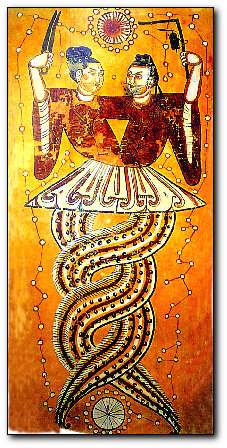
Nüwa is one of the best-known mythic figures in Chinese tradition. She is usually remembered as a creator goddess who made human beings and repaired the broken sky. Even though she does not belong to verifiable political history in the same way as later emperors and officials, she still matters because Chinese history is also shaped by myth, memory, and early cultural imagination.
Key Facts
- Identity
- Legendary creator goddess in Chinese mythology
- Lived
- Mythic antiquity
- Known For
- Creating humans and repairing heaven
- Historical Role
- A foundational figure in early Chinese mythic tradition
Quick Answer
Nüwa was a legendary goddess in early Chinese mythology. She is best known for creating human beings and repairing heaven after a cosmic disaster.
Why Is Nüwa Important?
Nüwa is important because she stands near the beginning of Chinese mythic storytelling. She helps explain how early Chinese tradition imagined the origin of people, order, and recovery after chaos. For beginners, she is one of the clearest examples of how myth and cultural memory work together.
She also matters because later generations kept returning to her story. Nüwa became more than one old tale. She turned into a symbol of creation, restoration, and protection. Readers who want broader chronological context can pair her with the Chinese Dynasties Timeline and the early setting discussed in Xia Dynasty Explained.
Early Life
Nüwa does not have an early life in the normal historical sense. She belongs to myth, not to a documented dynasty with clear dates and records. Different texts describe her in different ways, and some traditions link her closely with Fuxi.
The most important point for new readers is that Nüwa comes from very old layers of Chinese tradition. Her story grew out of a world where people explained origins through sacred narratives rather than through historical evidence.
Rise to Power
Nüwa did not rise to power through politics, war, or court struggle. Her importance comes from mythic status. She became powerful in cultural memory because stories presented her as a being able to shape human life and restore cosmic order.
Over time, writers and storytellers made her one of the central figures of early Chinese mythology. That long process of retelling gave her lasting authority in tradition.
Timeline
Mythic antiquity
Nüwa appeared in early Chinese mythic tradition
Ancient textual tradition
Stories linked her with creation and repairing heaven
Later periods
Her image remained influential in literature, art, and popular memory
Major Achievements
- She was remembered as a creator of human beings in one of the best-known Chinese origin stories.
- She repaired heaven after disaster, making her a symbol of restoring order after destruction.
- She became a lasting cultural figure in literature, religion, and visual art.
- She helped shape how later generations imagined the earliest age of the world.
Mistakes and Controversies
The main controversy is not about personal wrongdoing, but about interpretation. Nüwa is a mythic figure, so readers should not treat every story about her as literal political history. Different versions of the myth also disagree about details, which is normal in ancient tradition.
Another difficulty is that modern readers sometimes try to force a sharp line between myth and history. In practice, both matter. Myth does not give us verified events, but it does reveal what people valued, feared, and imagined about beginnings.
Death and Legacy
Most traditions do not describe Nüwa's death the way a normal biography would. As a mythic figure, she belongs to sacred narrative rather than to a fully historical life cycle. What matters more is the legacy of her story.
Later generations remembered Nüwa as a figure of creation, protection, and repair. That legacy helps explain why she still appears in discussions of Chinese mythology, early culture, and the long development of Chinese civilization. Readers interested in how early memory was later recorded can also connect this topic to Sima Qian, who helped shape how the distant past was narrated in Chinese tradition.
Simple Summary
- Nüwa was a legendary creator goddess in Chinese mythology.
- She is famous for creating humans and repairing heaven.
- She is mythic, not a securely documented historical ruler.
- Her story shows how early Chinese tradition explained origins and order.
- She remained important in literature, art, and cultural memory.
FAQ
Who was Nüwa?
Nüwa was a legendary goddess in Chinese mythology best known for creating humans and repairing heaven.
Was Nüwa a real historical person?
She is generally treated as a mythic figure rather than a verifiable historical person.
Why is Nüwa important?
She matters because her story helps explain early Chinese ideas about creation, disorder, and restoration.