People
Qi of Xia: Yu's Son and the Start of Hereditary Rule
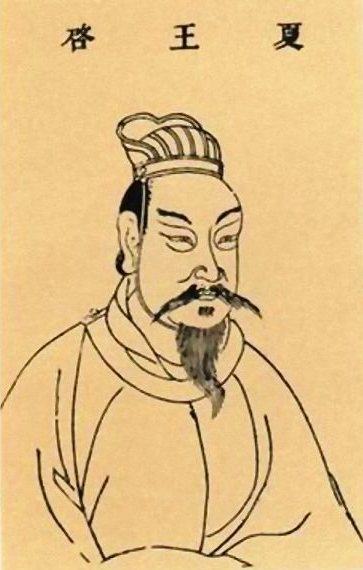
Qi of Xia, also called Xia Qi or King Qi, is remembered in Chinese tradition as the son of Yu the Great and an early ruler of the Xia Dynasty. His importance lies in one major shift: after Yu, power is said to pass within the ruling family, making Qi a key figure in the traditional beginning of hereditary rule.
Key Facts
- Identity
- Traditional second ruler of the Xia Dynasty
- Chinese Name
- 启 / 夏启
- Pronunciation
- Qǐ / Xià Qǐ
- Ethnic Affiliation
- Xia royal lineage; modern ethnicity labels do not apply cleanly
- Lived
- Traditional early Xia era, c. 21st century BCE
- Dynasty
- Xia Dynasty in traditional accounts
- Known For
- Succeeding Yu the Great and marking the shift toward hereditary kingship
- Historical Role
- A turning-point figure between sage succession and family-based dynastic rule
Quick Answer
Qi of Xia was the son of Yu the Great and is usually treated as the second ruler of the Xia Dynasty in traditional Chinese history.
He matters because his succession marks the traditional shift from choosing a worthy successor to passing power within one ruling family. Later writers often used this change to explain how China's dynastic age began.
Early Life
Very little reliable detail survives about Qi's early life. He belongs to the earliest layer of China's dynastic tradition, so modern readers should not expect the kind of biography available for later emperors, generals, or ministers.
What matters most is his family position. Qi was remembered as the son of Yu the Great, the flood-control hero whose public service gave him authority in early Chinese tradition.
That father-son relationship gives Qi's story its power. In the older stories of Yao, Shun, and Yu, rule is often described as passing to the worthy. With Qi, later tradition says power begins to stay inside the ruler's family.
Rise to Power
Qi rose to power after Yu. Traditional accounts preserve more than one way of remembering the succession, including the role of Yi, a figure sometimes connected with Yu's intended successor.
The final result in the standard dynastic sequence is clear: Qi becomes ruler after Yu. Later tradition treats this as the beginning of hereditary kingship, where the ruling house itself becomes the center of political continuity.
That change was not just a private family matter. Early kingship depended on support from lineages, nobles, followers, and military force. Qi's succession therefore represents a wider political shift, not only a son's inheritance.
Some transmitted stories also describe Qi fighting the Youhu clan, a group remembered as resisting his rule. Whether every detail can be verified is another question, but the story shows how later tradition imagined the new succession order being challenged and then enforced.
Readers who want the broader dynastic setting can start with the Xia Dynasty guide.
Timeline
After Yu the Great
Qi succeeds Yu
Traditional history places Qi after Yu in the early Xia ruling line.
Early Xia tradition
Hereditary kingship begins
Later writers treat Qi's succession as the shift from abdication to family-based rule.
Early Xia tradition
Conflict with the Youhu clan
Transmitted accounts remember Qi as facing opposition and using force to secure the new order.
Later memory
Qi becomes a symbol of dynastic inheritance
His name becomes tied to the beginning of hereditary rule in China's traditional dynastic sequence.
Major Achievements
1. He succeeded Yu the Great
Qi's central achievement was succeeding Yu. Yu's story explains authority through public service, especially flood control. Qi's story carries that authority into family succession.
That makes Qi essential to the traditional Xia narrative. Without him, the Xia would be remembered mainly as Yu's heroic beginning. With Qi, it becomes a ruling house that can continue from one generation to the next.
2. He marked the shift toward hereditary rule
Qi did not create a mature imperial system like the later Qin or Han. His importance is earlier and more basic: later tradition uses him to explain when rule began to stay inside one family line.
This shift is often described as the move from a more public ideal of succession to "family rule over the realm." In Chinese terms, this is the idea behind jiatianxia, or rule becoming tied to the ruler's house.
3. He helped define the Xia as a dynasty
The Xia Dynasty matters because it is remembered as the first dynasty in the traditional Chinese sequence. Qi helps make that claim meaningful.
If Yu begins the Xia through achievement, Qi turns that beginning into succession. This is why he is not only Yu's son in the story. He is the figure who helps the Xia look like a dynasty rather than a single hero's rule.
4. He became part of China's oldest political memory
Qi's story helped later writers explain a long-lasting question: why could political power belong to a ruling family?
The answer was not presented only as a theory. It was told through stories of Yu, Qi, succession disputes, resistance, and the fragile beginning of Xia kingship.
Why Is Qi of Xia Important?
Qi of Xia is important because he stands at the turning point between sage succession and hereditary dynasty. Earlier tradition remembers Yao and Shun as rulers who passed power to worthy successors. Qi's succession changes the pattern.
He also matters because he gives the Xia Dynasty its institutional meaning. The Xia is not only remembered as China's first dynasty because it comes first in a list. It is remembered as first because it explains how family-based kingship began.
For beginners, Qi is one of the best figures for understanding why the Xia is historically important even when its evidence is difficult. His story is less about a full modern biography and more about how early China remembered the birth of dynastic rule.
Important People Around Qi of Xia
Yu the Great
Yu was Qi's father and the founding figure of the Xia tradition. Yu's flood-control achievement creates the authority that Qi later inherits.
Together, Yu and Qi frame the transition from service-based legitimacy to family-based succession. Yu explains why authority was earned. Qi explains how it became dynastic.
Yi
Yi appears in some traditional succession stories after Yu. His role matters because it shows that Qi's succession was not always remembered as simple and uncontested.
For readers, Yi is useful because he preserves the tension between two models of rule: passing power to the worthy and passing power within the ruling family.
The Youhu clan
The Youhu clan is remembered as resisting Qi. Traditional accounts of Qi's campaign against Youhu show that hereditary rule was imagined as something that had to be defended, not merely announced.
The story also gives Qi a more active political role. He is not only the person who receives power; he is also remembered as someone who secures the new order.
Tai Kang
Tai Kang was a later Xia ruler after Qi. His story is important because he is associated with losing the realm, which suggests that early hereditary kingship remained fragile.
Qi marks the beginning of the family line, but Tai Kang's failure shows that succession alone did not guarantee stable rule.
Mistakes and Controversies
The main controversy around Qi of Xia is evidence. The Xia is central to traditional Chinese history, but early Xia rulers do not have the same kind of direct contemporary documentation available for later periods.
That means Qi should be read carefully. He is historically important as a figure in Chinese political memory, but the exact details of his life, dates, speeches, and campaigns cannot be proven in the same way as later rulers supported by inscriptions, excavated texts, or administrative records.
There is also a political complexity in the idea of hereditary rule. Later tradition often treats Qi's succession as the start of dynasty, but that change can be read in more than one way. It creates continuity for a ruling house, but it also ties power more deeply to birth and family claim.
Sources and Historical Tradition
Qi's story comes mainly from transmitted texts and later historical accounts, not direct records from his own lifetime. The Shangshu preserves early political traditions around rulership, succession, and the conflict with Youhu.
Sima Qian's Shiji places Qi inside the Xia royal sequence after Yu. That placement became extremely influential because it helped later readers understand Xia as the first dynasty in a continuous historical order.
These sources are valuable, but they have limits. They show how later Chinese tradition remembered the beginning of dynastic rule. They do not prove every detail of Qi's life in modern historical terms.
This is why careful readers should hold two ideas together. Qi is a major figure in China's traditional memory of kingship, and his exact biography remains difficult to verify.
Death and Legacy
The details of Qi's death are not clearly documented. Later tradition is much more interested in what his succession meant than in the circumstances of his final years.
Qi's legacy is the idea of hereditary rule. After him, the Xia line continues, but it also faces crisis. The later stories of Tai Kang, Shaokang, and Xia Jie show that the new dynastic system could survive, break, recover, and finally collapse.
His place is therefore best understood as the beginning of a pattern. Qi represents the start of family-based kingship; Xia Jie represents the failed end of that same ruling house; and Shang Tang represents the next dynasty's claim to restore order.
Readers can place this together with:
Simple Summary
- Qi of Xia was the traditional son and successor of Yu the Great.
- He is usually treated as the second ruler of the Xia Dynasty.
- His succession marks the traditional beginning of hereditary kingship.
- Stories about Yi and the Youhu clan show that the change was not remembered as simple.
- Modern readers should treat Qi as both a key figure in Chinese political memory and a difficult early historical subject.
FAQ
Who was Qi of Xia?
Qi of Xia was the son of Yu the Great and is usually treated as the second ruler of the Xia Dynasty in traditional Chinese history.
Why is Qi of Xia important?
Qi is important because his succession marks the traditional shift from sage succession to hereditary rule within one ruling family.
Was Qi of Xia Yu the Great's son?
Yes. Traditional accounts describe Qi as the son of Yu the Great, the flood-control hero and founding figure of the Xia tradition.
Was Qi of Xia the founder of the Xia Dynasty?
Yu the Great is usually treated as the founding figure of Xia, while Qi is important because he made the dynasty hereditary by succeeding Yu.
Is Qi of Xia historically proven?
Qi is central to traditional Chinese history, but his exact biography is difficult to verify because early Xia rulers lack direct contemporary written records.