People
Sima Qian Explained: Shiji, Han Court, and Legacy
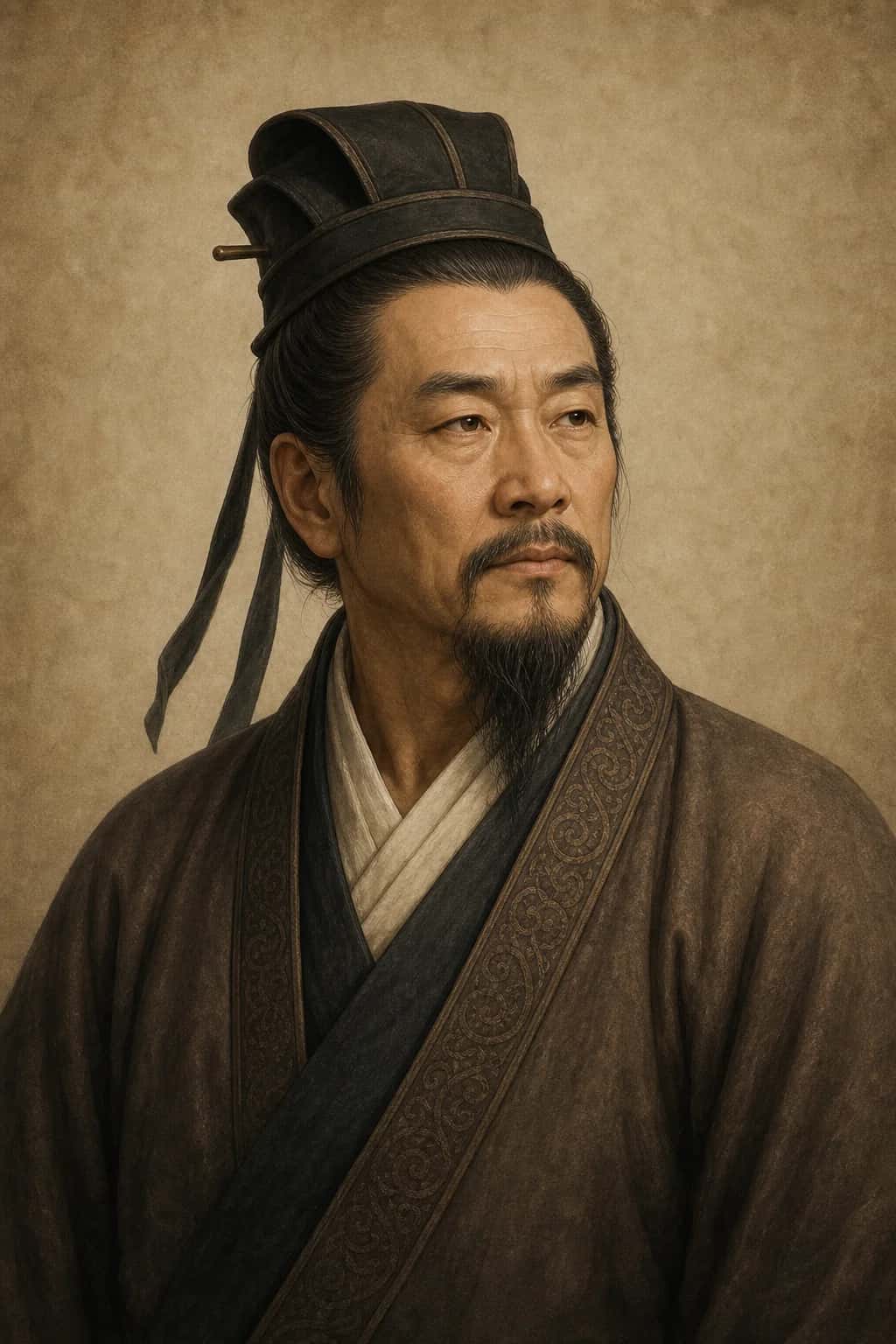
Sima Qian was the Western Han historian who wrote the Shiji, or Records of the Grand Historian. He matters because he did more than record facts. He gave later China a powerful way to tell history through rulers, events, institutions, and human lives.
Key Facts
- Chinese Name
- 司马迁
- Pronunciation
- Sīmǎ Qiān
- Identity
- Western Han historian, writer, and Grand Historian
- Lived
- c. 145-c. 86 BCE
- Dynasty
- Western Han
- Known For
- writing the Shiji and shaping Chinese historical memory
- Historical Role
- foundational figure in Chinese historiography
Quick Answer
Sima Qian was a Western Han historian and court official best known for writing the Shiji. His work helped define how later Chinese historians organized the past, judged rulers, and remembered major figures.
His life is also remembered for a painful choice. After the Li Ling affair, he suffered castration but chose to live and finish his history.
Early Life
Sima Qian was born into a family connected to the office of the Grand Historian. His father, Sima Tan, served at court and cared deeply about preserving the past.
That family background mattered. Sima Qian grew up seeing history not as a hobby, but as a responsibility: someone had to gather memory, organize evidence, and explain why states rose and fell.
As a young man, he also traveled through different regions. Those journeys gave him more than book knowledge. They exposed him to landscapes, local traditions, old sites, and stories that later enriched his historical writing.
Rise to Power
After Sima Tan died, Sima Qian inherited both the office and the unfinished ambition behind it. He continued the project his father had hoped to complete.
His position at the Han court gave him access to records and learned circles. Yet his importance came from how he used those materials. He did not simply arrange data. He built a historical world where emperors, ministers, generals, rebels, thinkers, and defeated men could all carry meaning.
Timeline
c. 145 BCE
Sima Qian was born
He came from a family tied to historical and court record-keeping.
Youth
He traveled through different regions
These journeys helped him connect written tradition with places, stories, and local memory.
Western Han court
He served as Grand Historian
Sima Qian inherited his father's historical mission and gained access to court materials.
After the Li Ling affair
He chose to finish the Shiji
After severe punishment and humiliation, he continued writing rather than abandon the work.
Later tradition
The Shiji became a classic
Its structure shaped later dynastic histories and Chinese historical memory.
Major Achievements
1. He completed the Shiji's large historical design
The Shiji covers a vast span, from deep antiquity to the age of Emperor Wu of Han. It uses basic annals, chronological tables, treatises, hereditary houses, and biographies to connect political history with human stories.
That structure made history more than a list of reigns. It allowed readers to see rulers, institutions, moral choices, wars, reforms, and personal tragedy in one larger pattern.
2. He helped establish biographical history
Later Chinese dynastic histories owed much to Sima Qian's model. Biography became a core way to explain the past.
This mattered because Chinese history was not only about emperors. Sima Qian made room for generals, advisers, merchants, assassins, scholars, rebels, and people whose lives showed the pressure of their times.
3. He wrote historical figures with moral depth
Sima Qian's people rarely feel flat. Figures such as Liu Bang, Xiang Yu, Han Xin, Li Guang, and many others appear with ambition, talent, weakness, luck, and tragedy.
That is why the Shiji became both a historical classic and a literary classic. It preserved memory while also shaping how readers felt the weight of a life.
4. He preserved early Chinese historical tradition
Many stories about early China, the Warring States, Qin, and early Han became widely known through the Shiji. Modern readers must treat early traditions carefully, but the work remains essential for understanding how later China remembered its past.
Why Is Sima Qian Important?
Sima Qian is important because he created one of the most durable forms of historical writing in China. Later readers learned to see dynasties through succession, institutions, moral judgment, and biography partly because of him.
He also matters because he did not write only about winners. He cared about failure, humiliation, loyalty, ambition, and the way power could crush talented people. That gives his history unusual human force.
For the Han setting, read him with the Han Dynasty, Emperor Wu of Han, Zhang Qian, and Wei Qing.
Important People Around Sima Qian
1. Sima Tan
Sima Tan was Sima Qian's father and an important court historian. His unfinished historical ambition became one of the driving forces behind Sima Qian's work.
2. Emperor Wu of Han
Emperor Wu of Han was the ruler under whom Sima Qian lived and served. His reign brought expansion, campaigns, fiscal pressure, and political trauma, all of which shaped the world behind the Shiji.
3. Li Ling
Li Ling was the general whose case changed Sima Qian's life. Sima Qian defended him, angered Emperor Wu, and suffered a punishment that became central to later memory of his life.
4. Ban Gu
Ban Gu, the Eastern Han author of the Book of Han, inherited and reshaped the historical tradition after Sima Qian. Comparing them helps readers see how dynastic history developed after the Shiji.
Mistakes and Controversies
The main complexity is that the Shiji is both history and literary interpretation. It preserves precious material, but it is not a modern archive where every sentence can be treated as direct evidence.
This is especially important for earlier periods. Sima Qian used transmitted texts, older traditions, court materials, and stories available in his time. Those sources are valuable, but some details should be read as traditional memory rather than fully verifiable modern history.
There is also the question of author perspective. Sima Qian's personal suffering may have sharpened his sympathy for defeated or mistreated figures. That does not make his history unreliable by itself, but it does remind readers that great historical writing still has a human author behind it.
Sources and Historical Tradition
Sima Qian's own life is known through traditional accounts, especially the autobiographical and explanatory parts connected with the Shiji. Later readers also shaped his image around the idea of enduring disgrace in order to finish a great work.
The Shiji itself combines court records, transmitted texts, older historical materials, oral traditions, and authorial judgment. Its value lies both in the information it preserves and in the way it organizes that information.
For that reason, Sima Qian should be read with respect and caution. He is not just a source of facts. He is also one of the people who taught later generations how facts could become history.
Death and Legacy
Sima Qian's exact death date is uncertain, but he is usually placed around c. 86 BCE. After his death, the Shiji became one of the central works of Chinese historiography.
Later memory often turns him into a symbol of writing through suffering. That image remains powerful because his greatest achievement was not separated from his personal ordeal. He chose to finish the record.
Simple Summary
- Sima Qian was a Western Han historian and the author of the Shiji.
- He inherited his father's historical mission and turned it into a lasting classic.
- The Shiji helped establish biographical historical writing in China.
- His punishment after the Li Ling affair became central to how later readers remembered him.
- His work should be read as both a major historical source and a carefully shaped literary history.
FAQ
Who was Sima Qian?
Sima Qian was a Western Han historian and court official best known for writing the Shiji, one of the most important historical works in Chinese tradition.
Why is Sima Qian famous?
He is famous because the Shiji shaped Chinese historical writing and because he continued the work after suffering severe punishment in the Li Ling affair.
What did Sima Qian write?
He wrote the Shiji, or Records of the Grand Historian, a vast history from early tradition to the Western Han period.
Why is the Shiji important?
The Shiji is important because it joined rulers, institutions, chronology, and biographies into a powerful model that influenced later dynastic histories.