Questions
What Dynasty Came Before the Sui Dynasty?
The Northern Zhou dynasty came directly before the Sui dynasty in northern China. In 581 CE, Yang Jian took the Northern Zhou throne and founded the Sui dynasty.
China was then divided. The Chen dynasty still ruled in the south when Sui began, and Sui conquered Chen in 589. So Northern Zhou was the Sui's immediate northern predecessor; Chen was the last southern dynasty before reunification under Sui.
Why Are There Two Answers?
Before Sui, northern and southern China had separate rulers. Northern Zhou and Chen existed at the same time, rather than following one another as rulers of the whole country. Northern Zhou had conquered its northern rival, Northern Qi, in 577, but it did not conquer Chen.
A simple list that places “Southern and Northern Dynasties” before “Sui” names the larger period of division. It does not mean that a single dynasty called the Southern and Northern Dynasties ruled all of China. For the wider setting, see the Wei-Jin and Southern and Northern Dynasties guide.
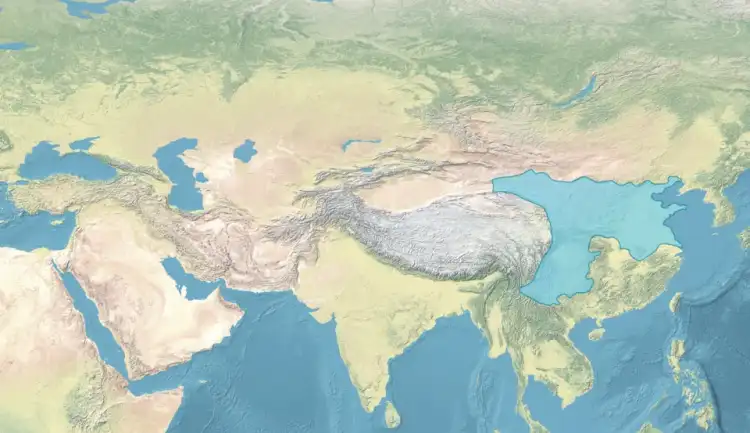
The blue area represents Northern Zhou around 577, after its conquest of Northern Qi. The map is a modern reconstruction, not an exact record of every border, and it does not depict Sui in 581 or a unified China. Map by Incall, via Wikimedia Commons, resized and converted to WebP, CC BY-SA 4.0.
How Did Northern Zhou Become Sui?
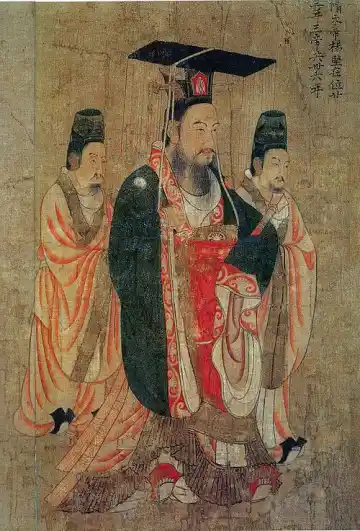
Yang Jian was a powerful official at the Northern Zhou court. After a young emperor came to the throne, Yang took control of the government and overcame opposition. In 581 he took the throne himself, ending Northern Zhou and establishing Sui. He is known as Emperor Wen of Sui.
This was a change of ruling house in the north. It did not immediately bring the Chen-ruled south under Sui control.
What Happened to Chen?
Chen was the last of the Southern Dynasties. Its court was based at Jiankang, near modern Nanjing, while the newly founded Sui ruled in the north. For eight years, 581–589, Sui and Chen existed alongside each other.
In 589 Sui armies conquered Chen, ending the separate southern court and bringing the principal northern and southern Chinese regimes under one dynasty. The last Chen emperor, Chen Shubao, lost his throne. This is the point usually used for Sui reunification, eight years after the dynasty began.
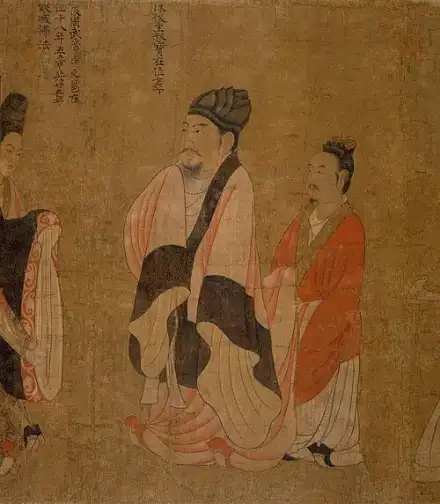
The portrait depicts Chen Shubao, not the conquest itself. Wikimedia Commons, public domain.
The Sequence at a Glance
- 557–581: Northern Zhou ruled in the north; Chen ruled in the south from 557 to 589.
- 577: Northern Zhou defeated Northern Qi, bringing the major northern regimes under its rule.
- 581: Yang Jian replaced Northern Zhou with Sui. Chen continued in the south.
- 589: Sui conquered Chen, ending the north–south division of these courts.
The story of Northern Zhou's conquest of Northern Qi explains the northern step. The rise of the Chen dynasty follows the separate southern succession.
Tang followed Sui in 618. For a later view of cross-regional exchange, see what the Tang dynasty traded.
Sources
- Metropolitan Museum of Art: China, 500–1000 CE — dates of Northern Zhou, Chen and Sui, and the 581–589 transition.
- Peter Lorge, “The Sui and Tang Dynasties,” Cambridge University Press, pp. 93–112 — Yang Jian's Northern Zhou career, accession and Sui's conquest of the south; the chapter summary is publicly available.
- Charles Holcombe, A History of East Asia, Cambridge University Press, “The Sui Reunification” — Northern Zhou's 577 conquest and the later Sui conquest of the south.
Frequently Asked Questions
Was the Chen dynasty before or during the Sui dynasty?
Both: Chen began before Sui and continued in the south from Sui's founding in 581 until its conquest in 589.
Did the Sui dynasty replace Northern Zhou or Chen?
Sui replaced Northern Zhou in the north in 581, then conquered Chen in the south in 589.
What came after the Sui dynasty?
The Tang dynasty followed the Sui dynasty in 618.