Questions
How Did Buddhism Spread to China? Routes and Translation
Buddhism spread to China through networks linking South and Central Asia with the Chinese world. Traveling monks, merchants, translators, and local patrons carried teachings and texts along these routes. It was a gradual process, not a single mission or a journey by one person.
There is evidence of Buddhism in China during the Eastern Han dynasty (25–220 CE). A court edict from 65 CE refers to Buddhist practice, but the precise date and route of Buddhism’s first arrival remain uncertain. Its later growth took centuries.
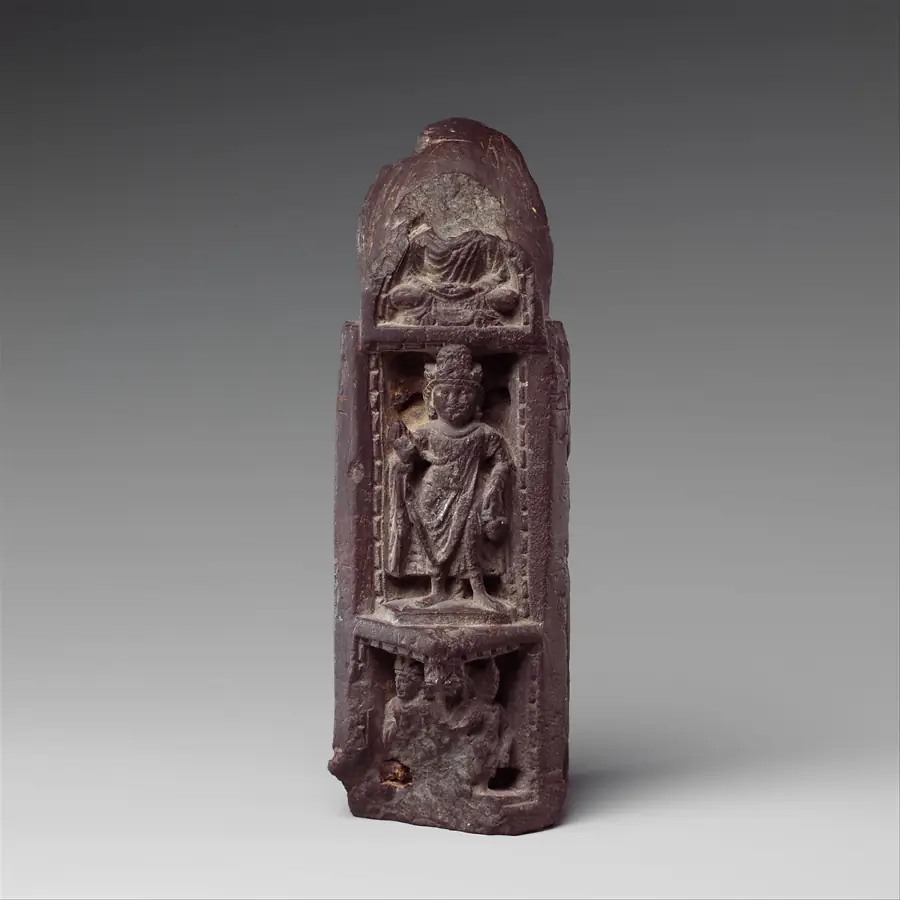
This portable shrine from Gandhara dates to the fifth or sixth century. It illustrates a later Buddhist object from a region connected to wider Asian networks; it is not evidence of the first journey to China. The Metropolitan Museum of Art, public domain.
Routes Connected Communities
Buddhism began in South Asia. Over time it reached communities in Central Asia, where travelers encountered monasteries, teachers, images, and texts. The overland Silk Road was a network of connected routes, not a single road running directly from India to China.
People and ideas moved between towns and oasis communities. Merchants could support religious institutions and carry objects, while monks traveled, taught, and brought texts. No surviving record identifies every person involved or proves that one caravan brought Buddhism to China.
Maritime connections also linked South Asia, Southeast Asia, and China. They became important for travel and exchange, but the evidence does not establish a single first route for Buddhism's arrival.
Translation Made Teachings Accessible
Texts could travel, but most people in China could not read the languages in which they arrived. Translation into Chinese allowed teachings to circulate beyond small groups of travelers. Translators and their collaborators had to find words for unfamiliar ideas, so making a text intelligible involved explanation as well as translation.
The Buddhist teacher An Shigao is associated with translations at Luoyang in the second century CE. Other translators followed. Their work shows that Buddhism's spread depended on repeated encounters and cooperation over time, rather than a single founder of Chinese Buddhism.
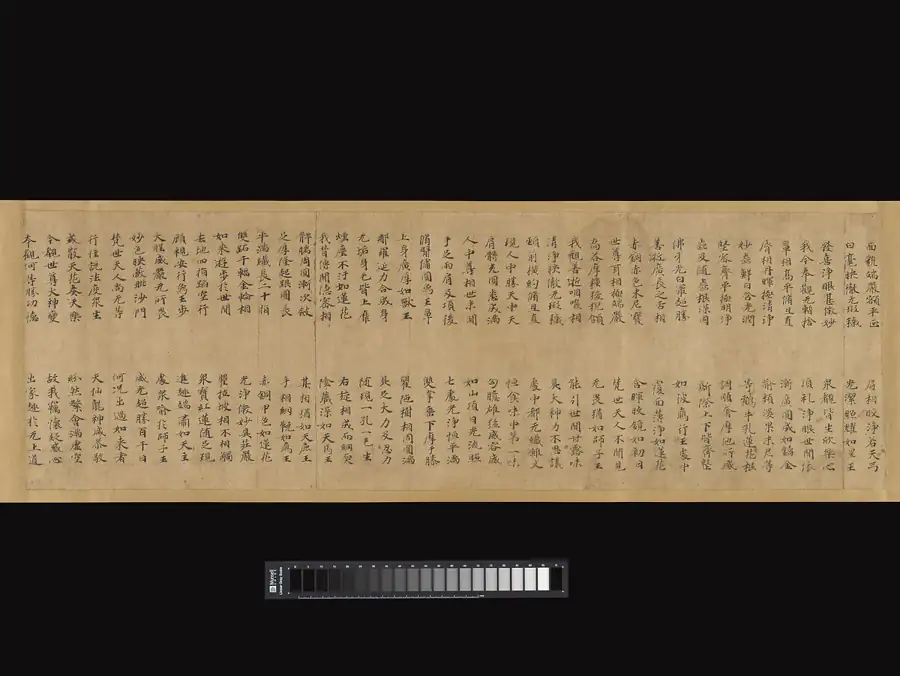
This Chinese manuscript dates to around 700 CE, centuries after the earliest translations discussed above. It shows the later copying of Buddhist texts in Chinese. The Metropolitan Museum of Art, public domain.
Communities Helped Buddhism Take Root
People who supported monks, copied texts, funded images, and gathered around teachings helped create lasting communities. Different patrons and believers had different reasons for participating; it is too simple to say that all Chinese people accepted Buddhism for one reason.
After the Han dynasty, during centuries of political division, Buddhist institutions and practices expanded. The art and manuscripts preserved at Dunhuang offer evidence of Buddhist communities and exchange in later centuries. They do not show precisely when Buddhism first entered China.
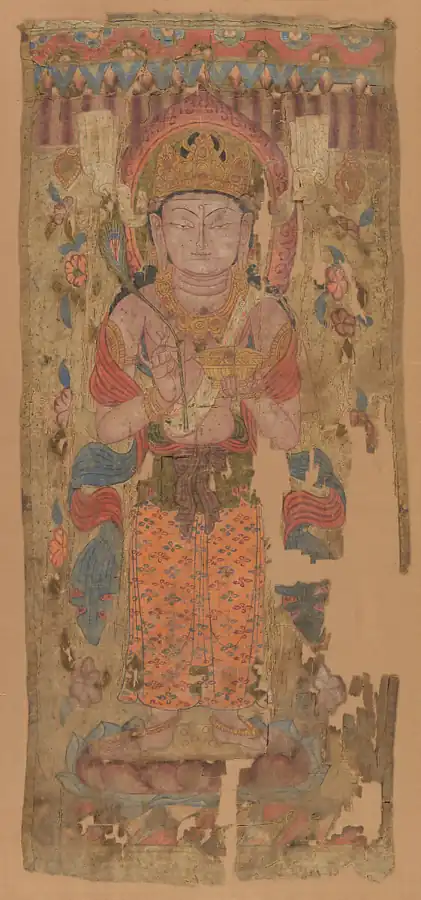
This banner from the Dunhuang area dates to the ninth or tenth century and belongs to a later phase of Buddhist patronage. The Metropolitan Museum of Art, public domain.
Did an Emperor Bring Buddhism to China?
A later tradition tells of Emperor Ming of Han dreaming of a golden figure and sending envoys west. The story became influential, but it is not conclusive evidence that a single imperial mission introduced Buddhism. Earlier and later evidence must be assessed separately from the legend.
A Continuing Exchange
Chinese monks later traveled west to seek teachings and texts. Xuanzang's seventh-century journey belongs to this later phase, long after Buddhism was already present in China. His return with texts contributed to translation and study, rather than marking the first arrival of Buddhism.
For the political setting of early contacts, see the Han dynasty and how the Han used the Silk Road.
Sources
- International Dunhuang Programme: Chinese Buddhism on the Silk Roads — transmission and the growth of Chinese Buddhism.
- Smithsonian National Museum of Asian Art: Buddhism in China — arrival and later development.
- Routledge Encyclopedia of Philosophy: Early Chinese Buddhism — the 65 CE edict and early evidence.
- Erik Zürcher, The Buddhist Conquest of China — second-century Luoyang and limits of later biographies.
- University of Pittsburgh dissertation, pp. 30–32 — versions and evidentiary limits of the emperor’s dream story.
- Max Planck Research Library: The Spread of Buddhism — travel and translation across Asia.
Frequently Asked Questions
When did Buddhism reach China?
Evidence places Buddhism in China by the Eastern Han period, but its exact first arrival is uncertain.
Did Buddhism spread only through merchants?
No. Monks, translators, patrons, and local communities also helped transmit and sustain teachings.
Did Xuanzang bring Buddhism to China?
Buddhism was already established before Xuanzang's seventh-century journey; he later brought back texts for translation and study.