Questions
How Did Liu Bang Become Emperor? Simple Steps Explained
How did Liu Bang become emperor? Liu Bang became emperor by surviving the collapse of Qin, entering the Qin heartland before his rivals, escaping danger at the Hongmen Banquet, using talented advisers and generals, defeating Xiang Yu in the Chu-Han struggle, and founding the Han Dynasty in 202 BCE.
His rise was not the story of the strongest warrior winning every battle. Liu Bang often looked weaker than Xiang Yu. What made him different was his ability to survive, retreat, use people well, hold a base, and turn a chaotic rebellion into a new imperial order.
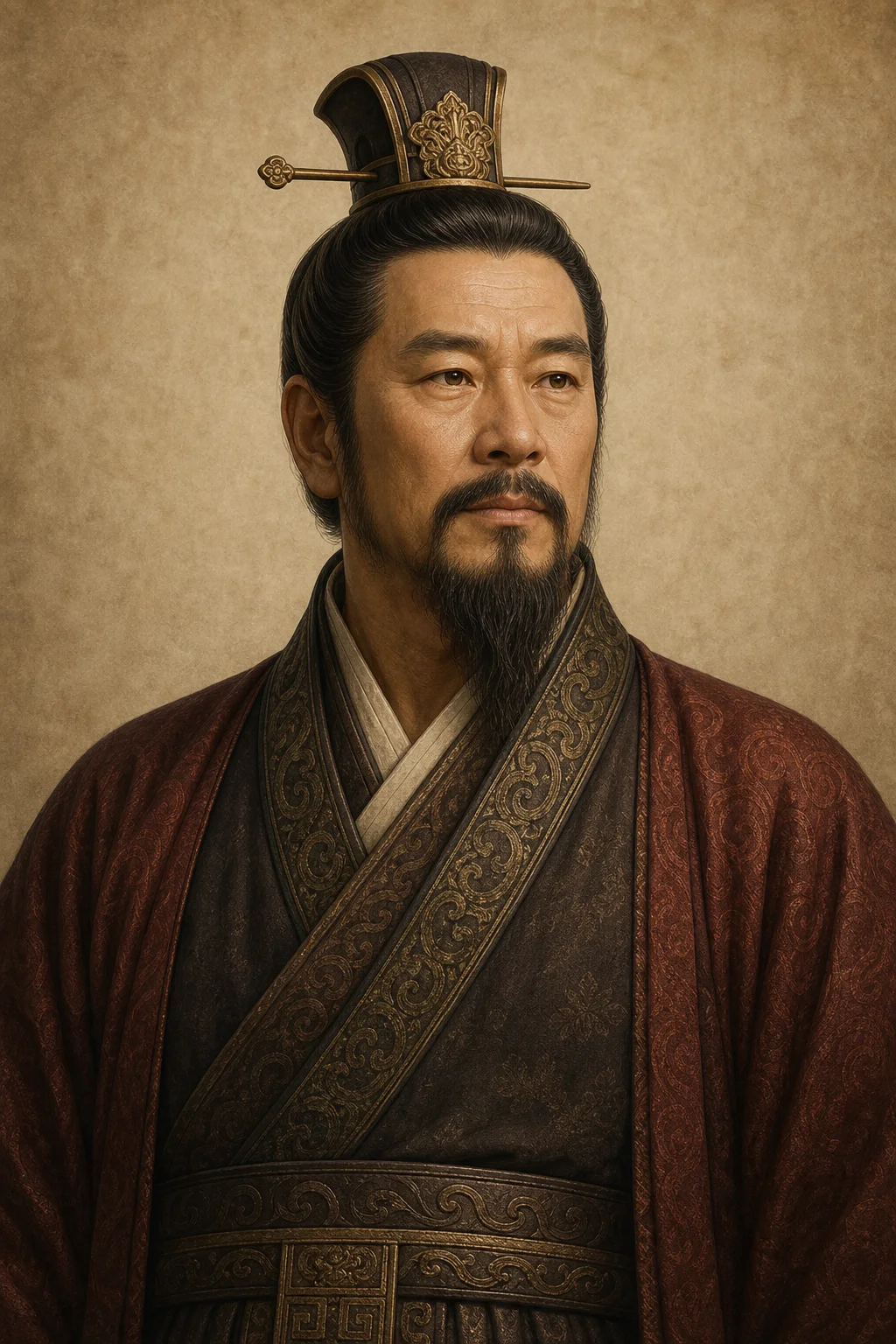
This image fits the question because Liu Bang's path to the throne is mostly a story about the man himself: a local Qin official who outlasted stronger rivals and became Emperor Gaozu of Han.
For the wider background, read Liu Bang, Chu-Han Contention, and Xiang Yu.
How Liu Bang Became Emperor
Liu Bang became emperor through a chain of political and military steps. He began as a low-ranking local Qin official, became a rebel leader during the Qin collapse, entered Guanzhong before Xiang Yu, survived the Hongmen Banquet, rebuilt from a weaker position, defeated Xiang Yu, and then took the imperial title.
The key point is that Liu Bang did not become emperor simply because he was a brilliant battlefield commander. His real strength was broader. He knew how to gather followers, accept help from more talented specialists, recover from defeat, and turn temporary advantages into lasting power.
Traditional histories such as Sima Qian's Shiji, or Records of the Grand Historian, preserve much of the narrative. They are essential sources, but they also shape Liu Bang's story as a founder's rise, so the details should be read as historical tradition as well as political memory.
The Main Steps That Put Liu Bang on the Throne
1. He rose from local office into rebellion
Liu Bang did not begin as a great aristocrat. Unlike Xiang Yu, who came from a famous Chu military family, Liu Bang came from a more ordinary background and served as a local official under Qin.
That low position mattered. It gave him contact with ordinary people, local networks, and practical administration. When Qin authority began to collapse, those connections helped him gather men around him and become the leader known as the Duke of Pei.
2. He entered Guanzhong before Xiang Yu
The first major turning point was Liu Bang's entry into Guanzhong, the Qin heartland around Xianyang. This was not just a military success. It put him close to the symbolic center of the old Qin Empire.
By entering first and presenting himself as less harsh than Qin rule, Liu Bang gained political credit. He looked less like a raider and more like someone who might restore order after Qin's collapse. That advantage later made him dangerous in Xiang Yu's eyes.
3. He survived the Hongmen Banquet
After Liu Bang entered Guanzhong, Xiang Yu arrived with far greater military strength. Liu Bang was in extreme danger. If Xiang Yu had killed him then, Liu Bang's path to the throne would have ended before the Chu-Han struggle truly began.
At the Hongmen Banquet, Liu Bang survived by lowering his posture, apologizing, using Zhang Liang's support, and escaping before the danger closed around him. The event showed one of Liu Bang's central qualities: he could bend when survival mattered more than pride.
Readers who want the story version can continue with How Liu Bang Escaped the Hongmen Banquet While Xiang Yu Let Him Go.
4. He used people better than Xiang Yu
Liu Bang was not the best general in his own camp. That was part of his strength, because he knew it.
He relied on people such as Xiao He for administration and logistics, Zhang Liang for strategy, Han Xin for major campaigns, and Chen Ping for political maneuvering. Instead of needing to be the strongest person at every task, he became the leader who could make talented people useful.
This is one reason he outlasted Xiang Yu. Xiang Yu was often more frightening in battle, but Liu Bang was better at building a working political and military team.
5. He turned bases and resources into long-term power
Liu Bang's path depended on having places to retreat, rebuild, and draw resources from. Guanzhong, Hanzhong, and the regions around Ba and Shu gave him more than land on a map. They gave him supplies, manpower, and time.
That mattered because Liu Bang did not always win immediately. He could lose, pull back, recover, and try again. In a long civil war, that ability was more valuable than one spectacular victory.
6. He defeated Xiang Yu and accepted the imperial title
The final step was the defeat of Xiang Yu. By 202 BCE, Liu Bang's side had gained the advantage through alliances, logistics, strategy, and pressure from multiple directions.
After Xiang Yu's final defeat and death at the Wu River, Liu Bang became the last major contender standing. He then took the imperial title and founded the Han Dynasty. The new ruler is known to history as Emperor Gaozu of Han.
For the final contrast between the two rivals, see How Did Xiang Yu Die?.
Why Liu Bang Beat Xiang Yu
Liu Bang beat Xiang Yu because he was better suited to winning a long struggle for empire.
Xiang Yu was the more dazzling battlefield figure. He had aristocratic prestige, personal courage, and the ability to terrify enemies in direct combat. But empire was not won by courage alone.
Liu Bang had different strengths. He could accept humiliation, use advisers, reward followers, recover from defeat, and hold together a coalition. He was not always impressive in the heroic sense, but he was extremely hard to remove from the game.
That is why the Chu-Han struggle matters. It shows that the person who wins a battle is not always the person who can build a dynasty. Liu Bang's genius was not simply fighting. It was surviving long enough to make power permanent.
What Changed After Liu Bang Became Emperor?
After Liu Bang became emperor, the problem changed from winning the world to governing it.
He did not throw away the entire Qin system. The Han Dynasty kept much of the imperial framework Qin had created, including centralized administration and commandery-county structures. The difference was that early Han rule tried to make the system more sustainable after Qin's harsh collapse.
Liu Bang also had to manage powerful followers. Men who helped win the empire could become threats after victory. Much of his reign involved rewarding, watching, and sometimes suppressing former allies who might challenge the throne.
The new dynasty was still fragile. Liu Bang's later confrontation with the Xiongnu at Baideng showed that Han power was not yet secure. But his reign did something decisive: it proved that a unified empire could survive after Qin's failure.
This is why Liu Bang matters beyond his personal biography: his victory turned a civil-war coalition into the beginning of a durable imperial dynasty.
Common Misunderstandings
Liu Bang did not become emperor because he was the strongest warrior
Liu Bang's strength was leadership, survival, and organization. He relied on other people for strategy, logistics, administration, and major military victories.
Xiang Yu was not weak
Xiang Yu was one of the most powerful military figures of the age. Liu Bang won not because Xiang Yu lacked battlefield force, but because Xiang Yu struggled to turn victory into stable political order.
The Han Dynasty did not become strong overnight
The founding of Han was a beginning, not an instant golden age. Liu Bang still faced internal threats, powerful followers, and frontier pressure after becoming emperor.
What Readers Should Conclude
Liu Bang became emperor because he survived every dangerous stage of the Qin collapse and Chu-Han struggle. He rose from local office, entered Guanzhong, escaped the Hongmen Banquet, used talented people, built a durable base, defeated Xiang Yu, and founded Han rule in 202 BCE.
The simplest way to remember his rise is this: Xiang Yu often looked stronger in battle, but Liu Bang was better at surviving, organizing, and turning victory into government.
FAQ
When did Liu Bang become emperor?
Liu Bang became emperor in 202 BCE after defeating Xiang Yu and founding the Han Dynasty.
What was Liu Bang's imperial title?
Liu Bang is known as Emperor Gaozu of Han, the founder of the Han Dynasty.
Why did Liu Bang defeat Xiang Yu?
Liu Bang defeated Xiang Yu because he used talent well, maintained stronger long-term resources, built alliances, and survived setbacks better than Xiang Yu.
Was Liu Bang from a noble family?
No. Liu Bang came from a relatively ordinary background and served as a local Qin official before rising during the anti-Qin rebellions.
What dynasty did Liu Bang found?
Liu Bang founded the Han Dynasty, one of the most important dynasties in Chinese history.