Questions
Why Did the Eastern Han Fall? From Court Crisis to Warlords
Why did the Eastern Han fall? Long-running struggles between imperial relatives and eunuchs weakened the court, while social strain and the Yellow Turban Rebellion strengthened regional armies. After Dong Zhuo seized the capital, the emperor became a prize for rival warlords. Cao Cao then controlled the court in practice, and Cao Pi formally replaced the Han with Wei in 220 CE.
The main causes were:
- Child emperors repeatedly allowed rival court groups to rule in their name.
- Purges and factional conflict damaged the central government.
- Land concentration, disasters, and burdens on households increased social instability.
- The Yellow Turban crisis gave provincial commanders greater military independence.
- Dong Zhuo and later Cao Cao controlled the emperor, leaving Cao Pi able to complete the transfer of power.
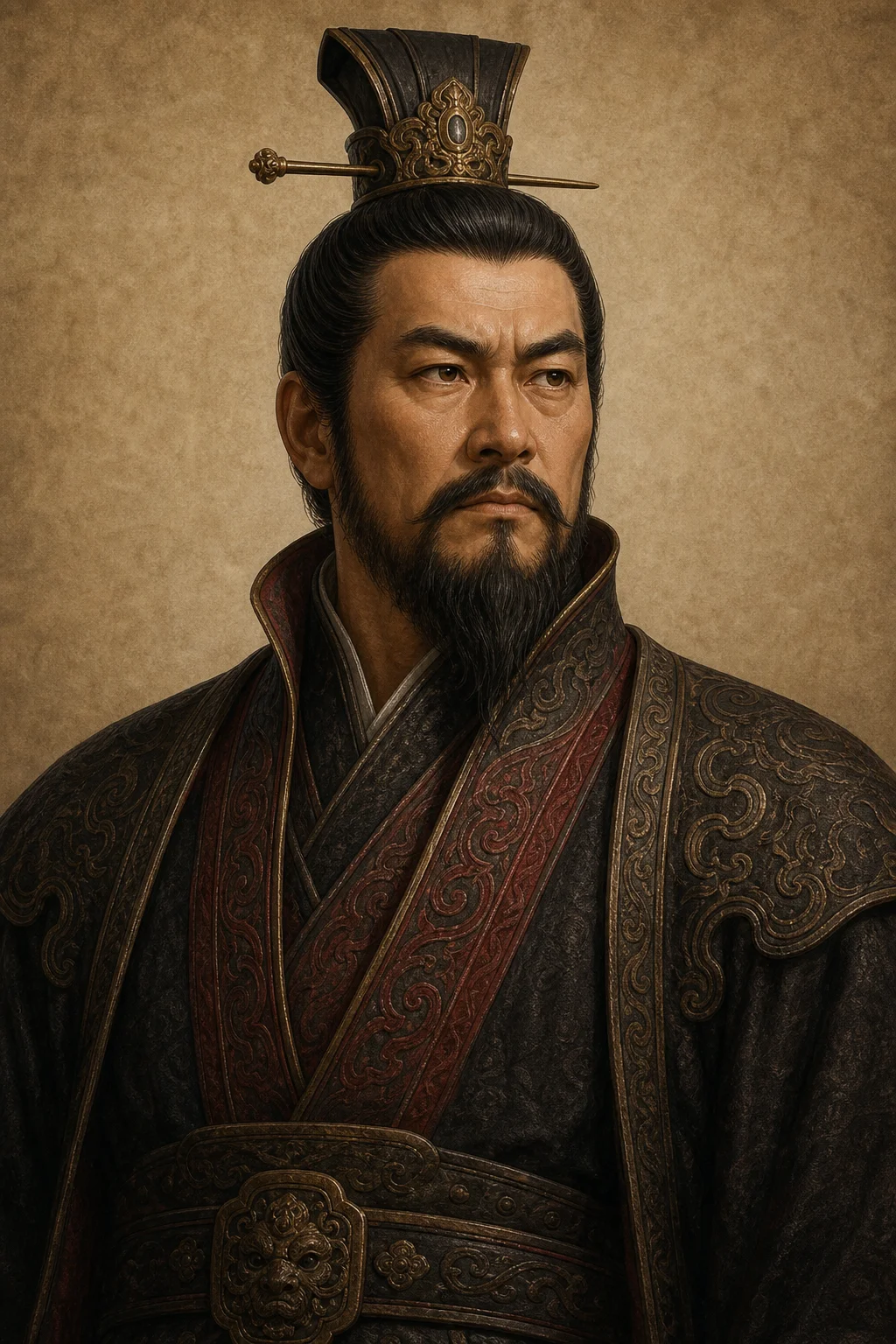
Cao Cao's portrait better captures the final Eastern Han problem: military and political leaders could build independent networks of troops, territory, and support. Eastern Han did not vanish in a single uprising; the center gradually lost the ability to coordinate elites, resources, and armies, until the emperor himself was controlled by a powerful minister.
Why the Eastern Han court could not recover
Eastern Han began with restoration, not collapse. Liu Xiu rebuilt the dynasty in 25 CE, and the early regime achieved a measure of stability. Over time, child emperors became common. Dowager empresses and their relatives often ruled while an emperor was young; once he came of age, he might use eunuchs to remove those relatives.
The cycle made government increasingly dependent on winning court factions. The later partisan prohibitions, or Party Disasters, showed how far conflict between officials and eunuchs had damaged political cooperation.
For the full Han story, start with Why Did the Han Dynasty Fall?.
Five reasons Eastern Han fell
1. Court factions repeatedly fought for control
The issue was not that all imperial relatives or all eunuchs acted the same way. The danger was a system in which each group could use a child emperor, a dowager empress, or a palace alliance to remove the other.
Repeated purges made offices and policy unstable. The court had less capacity to deal with taxation, relief, frontier defense, and local administration over the long term.
2. Social pressure made local crises harder to manage
Powerful local families held land, dependents, and regional influence. Land concentration, taxes and labor demands, disease, and natural disasters did not touch every place equally, but they made many communities more vulnerable.
This background does not reduce the Yellow Turban Rebellion to one economic cause. It does explain why a movement promising relief and renewal could mobilize people across several regions.
3. The Yellow Turban Rebellion exposed the weakness of the center
In 184 CE, the religious movement led by Zhang Jiao launched the Yellow Turban Rebellion. It did not immediately overthrow Eastern Han, and its forces were eventually suppressed. Its importance lay in forcing the court to rely on commanders and local resources it could not fully control.
Those military networks did not disappear once the rebellion was contained. They helped create the conditions in which regional leaders could command troops, territory, and political loyalty on their own.
4. Dong Zhuo's seizure of the capital broke imperial authority
After Emperor Ling died in 189 CE, conflict between He Jin and the eunuchs led to a palace coup. Dong Zhuo brought troops into Luoyang, deposed rulers, and took control of the court.
This was more than another change of ministers. The emperor became a source of legitimacy that armed leaders could use, rather than an independent center capable of directing them. After Dong Zhuo's death, rival warlords continued fighting instead of restoring the old order.
5. Cao Cao controlled Emperor Xian; Cao Pi ended the dynasty
Cao Cao brought Emperor Xian to Xuchang and issued orders in the emperor's name while building a northern military and administrative base. Han ritual and titles remained, but independent Han authority did not.
In 220 CE, Cao Pi accepted Emperor Xian's abdication and founded Wei. Cao Pi was the final successor, but the transfer succeeded because the imperial court had already lost practical control of its armies and territory.
Key events from rebellion to abdication
From court breakdown to Cao Wei
166–169 CE
Partisan prohibitions deepen political conflict
Conflict between officials and eunuchs widened, making stable political cooperation at court harder to sustain.
184 CE
The Yellow Turban Rebellion begins
The large uprising forced the court to rely on provincial commanders, accelerating the rise of regional military power.
189 CE
Dong Zhuo enters the capital
The court crisis after Emperor Ling's death brought troops into Luoyang; the emperor became a political prize armed leaders could use.
196 CE
Cao Cao brings Emperor Xian to Xuchang
Cao Cao organized orders and alliances in the Han emperor's name while consolidating his own military and administrative base.
220 CE
Cao Pi replaces Han and founds Wei
The abdication confirmed an existing reality: the Eastern Han court could no longer rule independently.
Read the Han Dynasty Emperors Timeline alongside Emperor Xian of Han: The Last Han Emperor to see why an emperor could retain the title without controlling the state.
The Yellow Turbans were a turning point, not the final trigger
The Yellow Turban Rebellion was a major turning point, not the event that immediately ended Eastern Han. It revealed social and administrative weakness and increased the role of local armies. The decisive loss of central authority came later, after the 189 CE court crisis and the wars among regional leaders.
Cao Pi's abdication ceremony did not create the crisis. It gave a formal ending to a situation in which the Han emperor had already become dependent on stronger men.
What changed after Eastern Han fell
Wei replaced Eastern Han, but China did not immediately reunify. Wei, Shu, and Wu competed in the Three Kingdoms period. The end of Eastern Han marked the breakdown of a unified imperial center and the beginning of a prolonged contest among military states.
For the next stage, read Three Kingdoms Guide: Wei, Shu, Wu, and Jin Reunification. Western Han's end followed a court-centered usurpation by Wang Mang; Eastern Han ended after countrywide warfare and warlord competition.
Sources and historical caution
The Book of the Later Han is a major source for Eastern Han politics. It also organizes events through ideas of loyalty, morality, and legitimate rule. A fuller explanation needs court conflict, social pressures, rebellion, and military power together rather than one villain or one uprising.
FAQ
Who ended the Eastern Han dynasty?
Cao Pi formally ended Eastern Han in 220 CE when Emperor Xian abdicated and Cao Pi founded Wei.
Did the Yellow Turban Rebellion overthrow Eastern Han?
No. It was suppressed, but it helped strengthen local military forces and deepen the crisis that later led to warlord rule.
Why was Dong Zhuo important to the fall of Han?
His seizure of the capital showed that armed commanders could control or replace emperors, making it far harder for the court to recover authority.