Questions
What Came After the Qin Dynasty? Simple Answer and Timeline
What came after the Qin Dynasty? The short answer is that the Qin Dynasty was followed first by the Chu-Han Contention, a civil war from 206 to 202 BCE, and then by the Han Dynasty. Liu Bang defeated Xiang Yu and became emperor in 202 BCE, founding the Western Han.
So the simple sequence is: Qin Dynasty, Chu-Han Contention, then Han Dynasty. The Han did not appear as a peaceful handoff. It came out of rebellion, rivalry, and a four-year struggle over who would control the post-Qin world.
For more context, read Why Did the Qin Dynasty Fall? and the Chinese Dynasties Timeline.
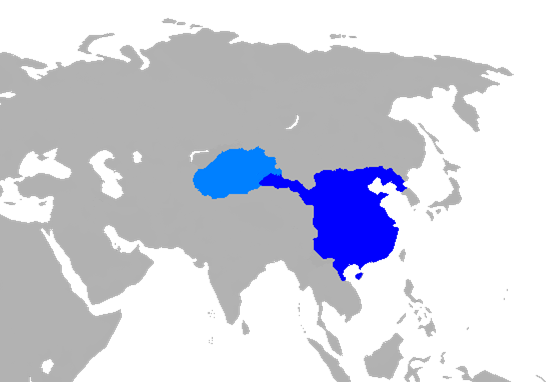
The map below shows the Han Dynasty after it had become a stable imperial power. It helps show the long-term result of the messy transition after Qin.
Short Answer
The Han Dynasty came after the Qin Dynasty, but not immediately in a stable way. When Qin collapsed in 206 BCE, China entered the Chu-Han Contention, a struggle between Xiang Yu and Liu Bang.
Xiang Yu was the strongest military leader after Qin fell. Liu Bang was first made King of Han, then fought his way back into the center of power. In 202 BCE, Liu Bang defeated Xiang Yu and founded the Western Han Dynasty.
For most dynasty lists, the order is written simply as Qin then Han. For historical understanding, it is clearer to remember the transition: Qin fell, Chu and Han fought, Han won.
Key Facts
- Direct Answer
- The Han Dynasty came after the Qin Dynasty.
- Transition Period
- Chu-Han Contention
- Transition Dates
- 206-202 BCE
- Main Rivals
- Xiang Yu and Liu Bang
- Final Winner
- Liu Bang, later Emperor Gaozu of Han
- New Dynasty
- Western Han Dynasty
- Han Founding Date
- 202 BCE
What Happened Immediately After Qin Fell?
The Qin Dynasty ended in 206 BCE when Ziying surrendered to Liu Bang. But Qin's fall did not create instant peace.
The anti-Qin coalition included several leaders with different ambitions. Some wanted to restore older regional powers. Some wanted revenge against Qin. Some wanted a new order that would keep the empire together.
Xiang Yu soon became the dominant figure. He divided the former Qin world among regional kings and gave Liu Bang the title King of Han. This settlement looked like a solution, but it was unstable from the beginning.
Liu Bang did not accept a distant, limited position as the final shape of his future. Xiang Yu had prestige and military force, but he struggled to turn victory into a durable government. That tension led directly into the Chu-Han Contention.
Why Was There a Transition Instead of an Immediate Han Dynasty?
There was a transition because Qin collapsed through war, not through an orderly succession. No single rebel leader automatically inherited the empire.
After Qin fell, the question was not only which dynasty came next. The deeper question was whether China would remain divided among regional kings or return to unified imperial rule.
Xiang Yu represented one possible post-Qin order. He leaned toward a world of powerful kings, military honor, and regional authority. Liu Bang represented another path. He built alliances, held a strong base in Han and Guanzhong, and gradually moved toward a new unified empire.
That is why the period between Qin and Han matters. It was the contest that decided whether Qin's imperial model would disappear or be rebuilt under a different ruling house.
Chu-Han Contention: The Period Between Qin and Han
The Chu-Han Contention lasted from 206 to 202 BCE. It was the power struggle between Xiang Yu, the Hegemon-King of Western Chu, and Liu Bang, the King of Han.
At first, Xiang Yu looked stronger. He had destroyed Qin's main field power at Julu and controlled the postwar settlement. Liu Bang had entered Guanzhong first, but Xiang Yu pushed him away from the central region.
Over time, Liu Bang recovered. He relied on advisers, logistics, alliances, and generals such as Han Xin. Xiang Yu could win dramatic battles, but Liu Bang's side became better at sustaining a long war.
The struggle ended in 202 BCE at Gaixia. Xiang Yu was defeated and died soon afterward. Liu Bang became emperor and founded the Han Dynasty.
When Did the Han Dynasty Begin?
The Han name began before Liu Bang became emperor. In 206 BCE, Xiang Yu made Liu Bang King of Han. That gave Liu Bang's regime its political name.
The Han Dynasty as an imperial dynasty is usually dated from 202 BCE. That is when Liu Bang defeated Xiang Yu and became emperor, later remembered as Emperor Gaozu of Han.
This distinction is important for beginners. If someone asks what came after Qin, the short answer is Han. If someone asks what happened right after Qin fell, the answer is the Chu-Han Contention.
Simple Timeline After Qin
Timeline
210 BCE
Qin Shi Huang dies
The First Emperor's death leads to succession crisis and court instability.
209 BCE
Rebellion spreads
The Chen Sheng and Wu Guang uprising helps break the fear of Qin rule.
206 BCE
Qin Dynasty ends
Ziying surrenders to Liu Bang, and Qin rule collapses.
206-202 BCE
Chu-Han Contention
Xiang Yu and Liu Bang fight for control of the post-Qin world.
202 BCE
Western Han begins
Liu Bang defeats Xiang Yu and becomes emperor, founding the Han Dynasty.
Why This Transition Matters
The transition from Qin to Han matters because Han did not simply erase Qin. It inherited many Qin systems, including the emperor title, commanderies and counties, written administration, roads, and centralized rule.
But Han also learned from Qin's collapse. Early Han rulers reduced some pressures, rebuilt trust after war, and gave the empire more time to recover. That made the Han order more durable than Qin's short-lived first empire.
This is why Qin and Han are often studied together. Qin created the first unified imperial state. Han showed how that state could survive, adapt, and become a long-lasting model for later Chinese dynasties.
Sima Qian's Shiji preserves many of the influential stories about this transition, including the fall of Qin, Xiang Yu's rise, Liu Bang's victory, and the founding of Han. Later readers should remember that these accounts combine historical memory, political judgment, and dramatic storytelling.
Quick Reader Questions
Was there a dynasty between Qin and Han? Not in the usual dynasty-list sense. There was a transition period called the Chu-Han Contention, but the standard sequence is Qin then Han.
Did Xiang Yu rule after Qin? Xiang Yu became the most powerful military leader after Qin fell and divided the former empire among kings, but he did not found a lasting unified dynasty.
Why does Han usually come right after Qin in timelines? Because the Han Dynasty was the next durable imperial dynasty after Qin, even though several years of civil war came between Qin's fall and Liu Bang's imperial founding.
What Readers Should Conclude
The best answer is simple but needs one extra step: the Han Dynasty came after the Qin Dynasty, but the immediate transition was the Chu-Han Contention. Qin ended in 206 BCE, Liu Bang defeated Xiang Yu in 202 BCE, and the Western Han Dynasty became the next major imperial dynasty of China.
FAQ
What dynasty came after the Qin Dynasty?
The Han Dynasty came after the Qin Dynasty. More precisely, Qin's fall was followed by the Chu-Han Contention, and Liu Bang founded the Western Han Dynasty in 202 BCE.
What happened right after the Qin Dynasty fell?
After Qin fell in 206 BCE, China entered the Chu-Han Contention, a civil war between Xiang Yu and Liu Bang over who would control the post-Qin world.
Was the Han Dynasty founded in 206 BCE or 202 BCE?
The Han name appeared in 206 BCE when Liu Bang became King of Han. The Han Dynasty as an imperial dynasty is usually dated from 202 BCE, when Liu Bang became emperor.
Who founded the dynasty after Qin?
Liu Bang founded the Han Dynasty after defeating Xiang Yu. He is remembered as Emperor Gaozu of Han.
Why is the Qin-to-Han transition important?
It shows how the first Chinese empire collapsed and how a new dynasty kept much of the imperial framework while building a more durable political order.