Questions
Why Did the Western Han Fall? How Wang Mang Took Power
Why did the Western Han fall? The emperor's authority weakened as the Wang outer-kin family gained influence at court. Wang Mang used his position as a relative and regent to take the throne in 9 CE and found the Xin dynasty. His takeover was the final act, not the only cause.
Four forces made it possible:
- Child rulers and unstable succession gave regents more room to govern.
- The Wang family accumulated offices, influence, and access to imperial decisions.
- Social and economic pressures made promises of reform more attractive.
- Wang Mang used ritual and abdication language to make an internal seizure of power look legitimate.
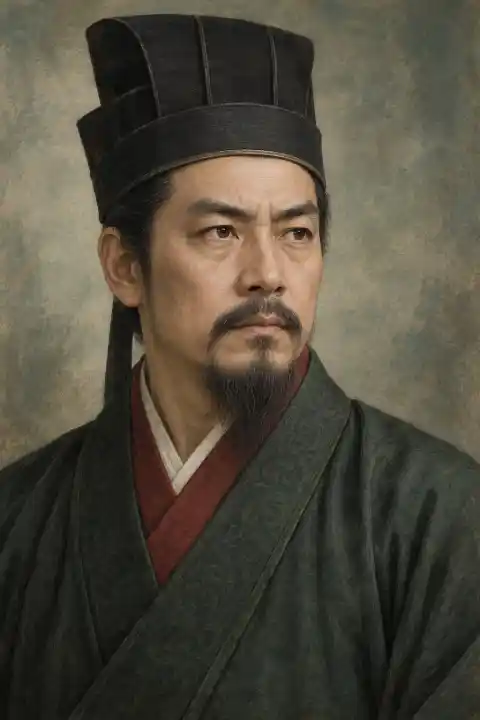
This portrait points to the central fact of Western Han's fall: the man who replaced Han was not an outside conqueror. Wang Mang was already a relative of the imperial family and a regent at the center of court power.
How the late Western Han crisis developed
Late emperors often depended on the families of empresses and dowager empresses. These relatives could receive high office and influence, especially when an emperor was young or unable to govern independently.
The Wang family rose through Empress Dowager Wang Zhengjun. Not every member controlled the government, but the network changed the balance of power: important decisions increasingly depended on people connected to the imperial household rather than on the emperor alone.
For the larger context, read Han Dynasty Guide: Rise, Government, Timeline, and Legacy.
Four reasons Wang Mang could replace Western Han
1. Outer-kin politics weakened independent imperial rule
Late Western Han succession and court competition gave relatives of empresses unusual influence. During the reigns of Emperor Cheng, Emperor Ai, and Emperor Ping, members of the Wang family held high positions and built durable political relationships.
Once a regent could make appointments and act for a child ruler, formal imperial authority could survive while independent imperial control shrank.
2. Wang Mang built power before taking the throne
Wang Mang presented himself as modest, learned, and committed to restoring order. As a senior official and then regent, he turned reputation, family connections, and court authority into political power.
In 9 CE he declared the Xin dynasty. Ritual transfer and abdication language gave an internal takeover a claim to legitimacy without first needing to conquer the capital.
3. Social pressure damaged confidence in the old order
Late Western Han faced land concentration, displacement, taxation and labor demands, and environmental shocks. These pressures varied by place, so they should not be reduced to one simple cause. They did make calls for land, money, and administrative reform more persuasive.
4. A child ruler left little resistance at the final moment
After Emperor Ping died, Wang Mang placed the child Ruzi Ying on the throne and continued to rule as regent. The child had no independent political network, and the Liu imperial house could not organize enough support to stop Wang Mang.
In 9 CE, Wang Mang's declaration of Xin formally ended Western Han. The final trigger was the transfer of the throne; the long-term cause was a court structure that had already weakened imperial control.
Key events in the fall of Western Han
From court power to dynastic replacement
Late first century BCE
The Wang family expands its influence
Through Empress Dowager Wang Zhengjun, offices and political resources increasingly accumulated in the Wang family network.
1 BCE–6 CE
Wang Mang governs as a leading regent
Emperor Ping was a child, allowing Wang Mang to direct court affairs and shift practical authority away from the emperor.
6–8 CE
Ruzi Ying becomes child ruler
The new ruler had no independent political network, while Wang Mang continued to control the center as regent.
9 CE
Wang Mang founds Xin
Accumulated regency power became an imperial title, formally ending Western Han.
23 CE
Xin collapses
Disrupted reforms, disasters, and rebellion destroyed Xin's fragile base before Han restoration followed.
The Han Dynasty Emperors Timeline places these events in sequence. See Ruzi Ying: Child Ruler Under Wang Mang Before Xin for the last child ruler's constrained position.
Wang Mang's takeover was the trigger, not the whole explanation
Saying that Wang Mang ended Western Han is correct but incomplete. It says who took the throne, not why he could do it. His success depended on a long shift in court power and on a political climate in which the old regime had lost credibility.
Xin's rapid failure makes the point clearer. Repeated changes to land, currency, and official titles were hard to implement; disaster and revolt then made it impossible for the new dynasty to build a stable base.
What happened after Western Han fell
Xin was not Eastern Han. It was a short interruption between two Han dynasties. After Xin collapsed, Liu Xiu won out among competing forces and restored the Han in 25 CE.
Eastern Han later ended differently, after rebellion, warlord competition, and the loss of central control. See Why Did the Eastern Han Fall?.
Sources and historical caution
The Book of Han is a central source for Western Han and Wang Mang. It records events through the political and moral language of its own time; this page therefore separates the final transfer of the throne from the longer court and social pressures that made it possible.
FAQ
Who ended Western Han?
Wang Mang ended Western Han in 9 CE when he founded the Xin dynasty.
Was Wang Mang an outside invader?
No. He came from the Wang outer-kin family and gained control inside the Western Han court before taking the throne.
Why did Han return after Wang Mang?
Xin failed amid administrative disruption, disaster, and rebellion. Liu Xiu restored Han rule in 25 CE.