Questions
Why Did Wang Mang Lose Power? The Fall of the Xin Dynasty
Why did Wang Mang lose power? Economic disruption, natural disasters and armed rebellions overwhelmed his Xin government. In 23 CE, insurgents entered the capital, Chang'an, and killed him. His policies contributed to the crisis, but no single reform explains the dynasty's fall.
Four pressures came together:
- Land and currency changes proved difficult to carry out and created opposition or uncertainty.
- Floods and food shortages displaced people and strained local government.
- Rival claimants and insurgent armies challenged Xin authority.
- Military defeats left the capital exposed.
How Did Wang Mang Come to Rule?
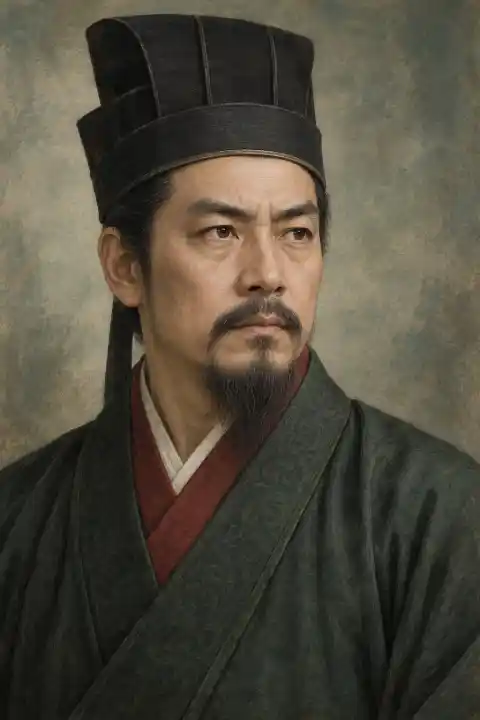
Wang Mang had been a powerful official and regent at the Han court. In 9 CE he replaced the ruling Liu family and established the Xin Dynasty. His claim drew on classical ideals and signs interpreted as heavenly approval, but opponents could rally around the name of Han and its surviving imperial relatives.
Xin inherited existing social pressures, and its own policies added new difficulties. The path from the fall of Western Han to the fall of Xin was therefore not one continuous event: Wang first replaced Han, then faced a separate crisis as ruler.
Why Did the Xin Dynasty Collapse?
1. Reforms met resistance and disrupted exchange
Wang announced that farmland would become “royal fields,” restricted land sales and proposed redistribution. His government also restricted the sale of enslaved people. These measures met resistance. In 12 CE Wang allowed the sale of royal fields and suspended prosecution for certain transactions in people; that did not mean all related rules immediately disappeared. Announcing redistribution also did not mean it occurred throughout the empire.
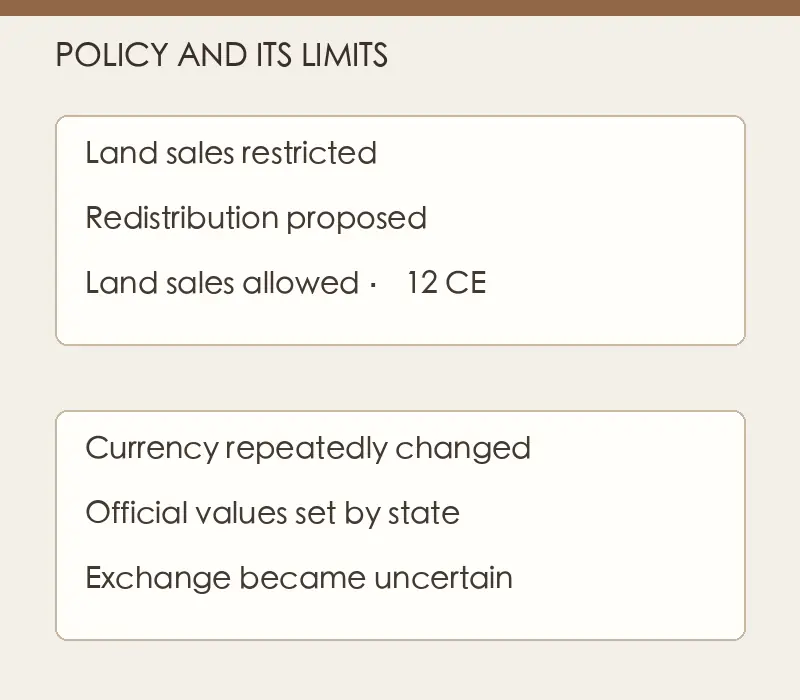
Currency changes began before Wang became emperor and continued under Xin. New coins carried official values that could differ sharply from their metal value, while repeated changes made it harder to know what could be used in exchange. The historian Greg Anderson's study of Wang Mang's reforms describes these policies and their limits.
2. Flooding and hunger increased pressure
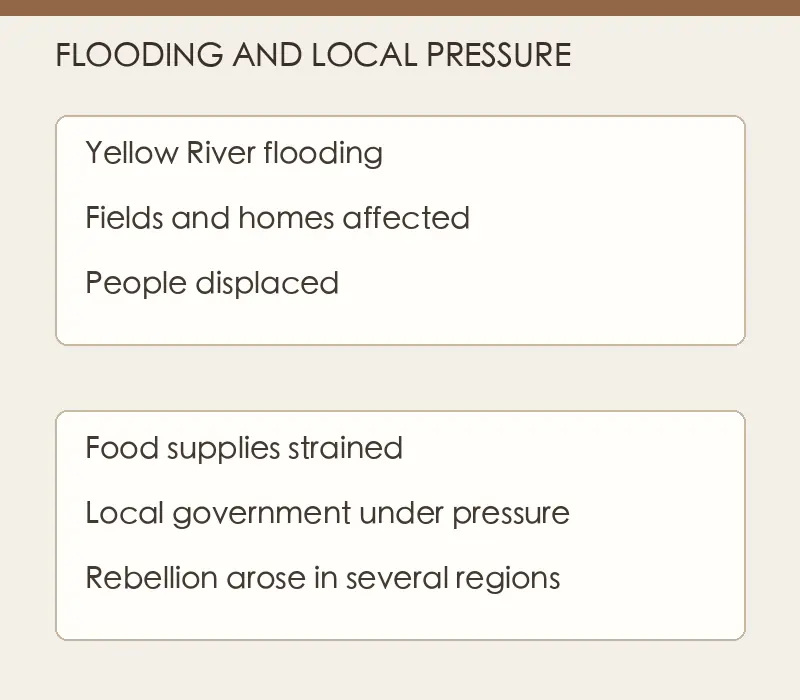
The Yellow River changed course and flooded low-lying areas during the Xin period. Flooding damaged livelihoods and displaced communities; food shortages made survival harder. These disasters did not automatically cause a revolution, but they placed a vulnerable population and its government under additional strain.
3. Rebellions offered alternatives to Xin rule
As hardship spread, armed groups emerged in different regions. Two important movements were the Red Eyebrows, named for their distinctive markings, and the Green Woods, or Lulin, groups. They were separate forces, with changing leadership and objectives; they should not be treated as a single army acting from one plan.
Some opponents also supported members of the Liu family as Han claimants. The Han name gave these movements a political alternative to Xin, even though rivalry continued among those who opposed Wang.
4. Defeat opened the way to the capital
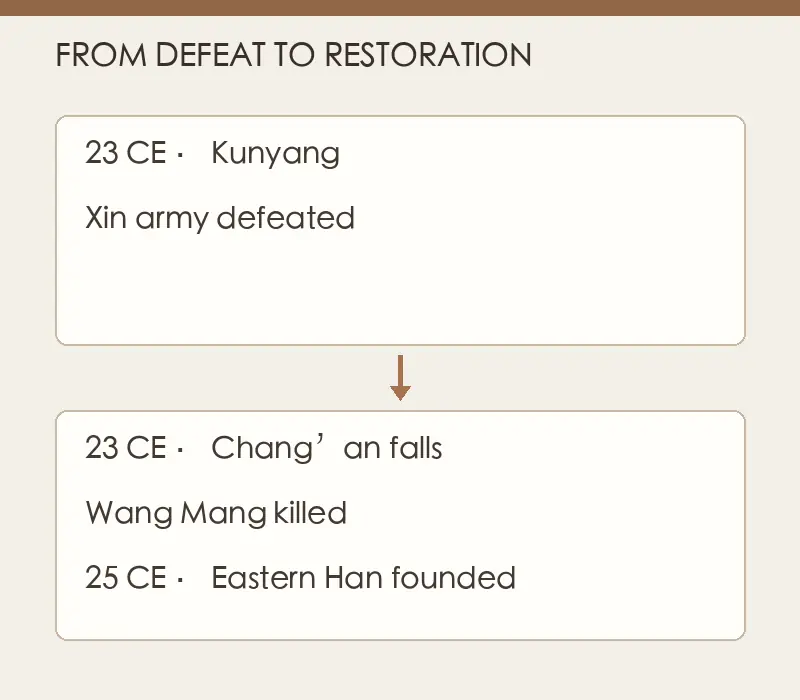
In 23 CE a Xin army suffered a major defeat at Kunyang against forces associated with the Han restoration, including Liu Xiu. The defeat weakened Wang's ability to suppress his opponents. Later that year insurgents entered Chang'an, where Wang was killed. The battle and the capital's fall were decisive blows after years of mounting pressure, rather than the sole causes of the crisis. The later chronicle Zizhi Tongjian, volume 39 records both events; its speeches and troop numbers should be treated cautiously.
What Happened After Wang Mang Died?
Xin ended in 23 CE, but peace and a stable Han restoration did not follow immediately. A Han claimant known as the Gengshi Emperor had already been proclaimed that year. Fighting among rival forces continued, and in 25 CE Liu Xiu established the Eastern Han. He spent the following years defeating rivals and consolidating control.
How Certain Are the Causes?
The main surviving narrative comes from the Book of Han (Hanshu), compiled after the Han restoration. It preserves extensive information about Wang's rule, but its authors wrote under a dynasty that regarded him as a usurper. Their moral judgments and accounts of his intentions deserve care.
Modern scholarship also examines how Wang built legitimacy through classical learning: see Béatrice L'Haridon's study in Early China. The relative weight of policy, disaster and rebellion cannot be measured precisely from the surviving evidence.
FAQ
When did Wang Mang lose power?
He was killed when insurgents entered Chang'an in 23 CE, ending the Xin Dynasty.
Did Wang Mang's reforms alone cause his fall?
No. Resistance and economic disruption combined with disasters, rebellions and military defeats.
Who restored the Han Dynasty after Wang Mang?
Several Liu family claimants opposed Xin. Liu Xiu founded Eastern Han in 25 CE, after further fighting.